
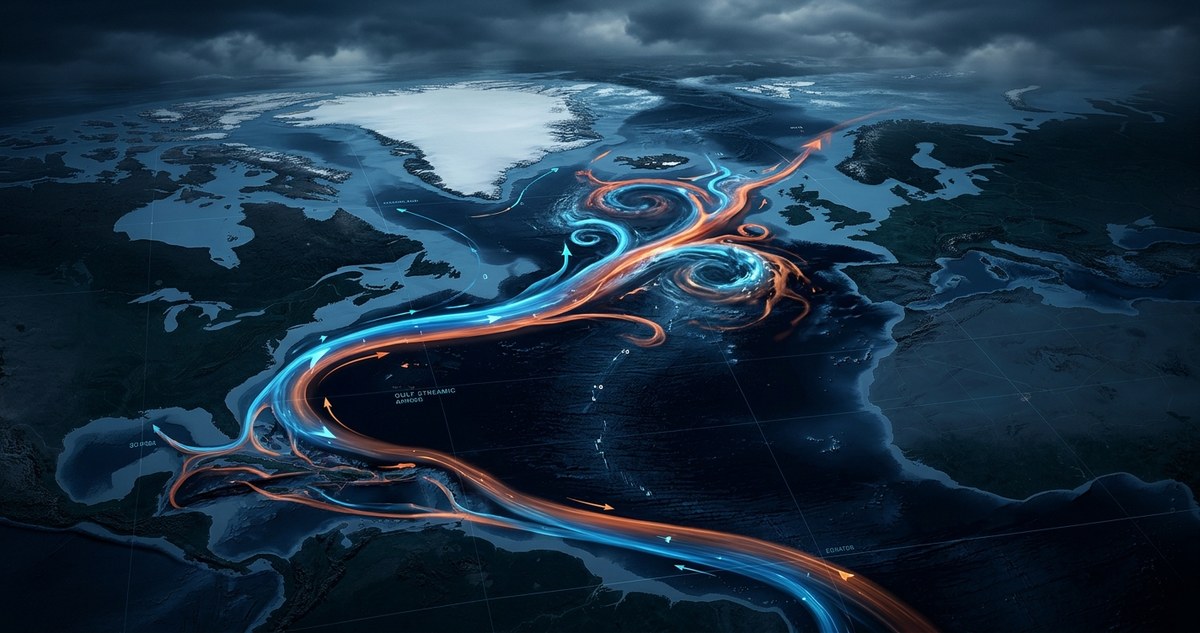
The ocean is not a silent, static body of water. Beneath the surface, a massive network of currents moves heat, salt, and nutrients around the planet. This system has operated for thousands of years, keeping our climate stable and predictable. But in 2026, the data is clear. These currents are changing. And they are changing faster than most climate models ever predicted.
Ocean currents function like a planetary circulatory system, distributing heat and nutrients around the world. In 2026, researchers confirm that this system is weakening faster than earlier climate models projected. From the Atlantic Meridional Overturning Circulation to deep Antarctic flows, these disruptions affect weather patterns, sea level rise, and marine food webs. Understanding these changes helps communities, scientists, and policymakers prepare for a rapidly shifting global climate and its consequences for entire ecosystems and societies.
The Ocean’s Hidden Engine
Most people never think about ocean currents. They see waves at the beach or follow shipping routes on a map. But currents are the true drivers of our climate system. They carry warm water from the equator toward the poles and send cold water back. This movement regulates temperatures, drives rainfall patterns, and supports marine life from tiny plankton to great whales.
The system is often called the global conveyor belt. It runs on differences in water temperature and salinity. Cold, salty water sinks in the North Atlantic and near Antarctica. That sinking motion pulls surface water from other regions, creating a loop that connects every ocean basin.
When this system weakens, the consequences spread everywhere.
What 2026 Research Reveals About Current Slowdown
In 2026, multiple research groups published findings that point to a troubling pattern. The Atlantic Meridional Overturning Circulation, or AMOC, is at its weakest point in more than a thousand years. Scientists use sediment cores, satellite data, and direct ocean measurements to track these changes. The trend is consistent and accelerating.
The AMOC is not the only system showing signs of stress. Deep water formation near Antarctica is also slowing down. Fresh meltwater from ice sheets dilutes the salty surface water, making it harder for it to sink. This disrupts the entire bottom half of the global conveyor belt.
These changes were expected to happen gradually over centuries. Instead, they are unfolding on a timescale of decades.
The Atlantic Meridional Overturning Circulation
The AMOC works like a giant pump. Warm water moves northward along the surface of the Atlantic. When it reaches the Arctic region, it cools, becomes denser, and sinks. That sinking pulls more warm water northward, creating a continuous loop.
In 2026, ocean buoys and satellite measurements show that this sinking has slowed by roughly 15 percent since the mid 20th century. That number might sound small, but it represents a massive disruption in energy transfer. The AMOC moves the equivalent of millions of power plants worth of heat energy every second.
A weaker AMOC means less heat reaches northern Europe. It also means more heat stays trapped in the tropical Atlantic, fueling stronger hurricanes and shifting rainfall patterns across Africa and South America.
Antarctic Bottom Water Changes
The Southern Ocean around Antarctica is another critical engine for global currents. Here, cold, salty water sinks to the seafloor and spreads northward. This deep water carries oxygen and nutrients to the rest of the world’s oceans.
New data from 2026 shows that Antarctic bottom water formation has slowed by more than 30 percent since the 1990s. The cause is melting ice from the Antarctic ice sheet. Fresh water from glaciers and ice shelves reduces the salinity of surface waters. Without enough salt, the water cannot sink as efficiently.
This slowdown affects ocean circulation in the Pacific, Atlantic, and Indian Oceans. It also reduces the amount of oxygen available in deep waters, putting pressure on marine ecosystems.
How Scientists Track Ocean Currents
Researchers use a variety of tools to monitor these changes. Each method provides a different piece of the puzzle.
Key Tools and Technologies
- Argo floats: These autonomous devices drift through the ocean, measuring temperature, salinity, and pressure at different depths. More than 4,000 Argo floats are active in 2026, providing real time data from areas that were once impossible to monitor.
- Satellite altimetry: Satellites measure sea surface height with remarkable accuracy. Changes in height reveal shifts in ocean currents and heat content.
- Mooring arrays: Chains of instruments anchored to the seafloor measure current speed, direction, temperature, and salinity over long periods. The RAPID array across the Atlantic has been collecting data since 2004.
- Climate models: Supercomputers run simulations that help scientists understand how currents respond to different warming scenarios. These models are updated each year with new observational data.
Each tool has limitations. Argo floats cannot operate under sea ice. Satellites only measure the surface. Models rely on assumptions that may not hold true as conditions change. But together, these methods create a reliable picture of what is happening beneath the waves.
Three Ways Changing Currents Affect Daily Life
The slowdown of ocean currents is not an abstract problem for scientists to debate. It affects people right now, in ways that are becoming harder to ignore.
-
Shifting weather patterns. A weaker AMOC changes the path of the jet stream. This can cause more prolonged heat waves in some regions and colder winters in others. Farmers in the United States are already seeing shifts in growing seasons that align with these changes.
-
Faster sea level rise along the East Coast. The Gulf Stream, part of the AMOC, normally pulls water away from the U.S. Atlantic coast. As it slows, water piles up along the shoreline. Cities like Miami, New York, and Boston are experiencing higher rates of sea level rise than the global average.
-
Disrupted marine ecosystems. Ocean currents bring nutrients to the surface in places like the California Current and the Benguela Current. When currents weaken, those nutrients stay deeper. Fish populations decline, affecting fishing communities and food supply chains.
These three impacts are already measurable in 2026. They are expected to intensify in the coming decades.
Common Misconceptions About Ocean Currents
Many people hold incorrect ideas about how ocean currents behave and why they matter. The table below clears up some of the most frequent misunderstandings.
| Misconception | Reality |
|---|---|
| Ocean currents only affect marine life | Currents regulate global climate, weather, and sea level for everyone on land |
| The Gulf Stream is the only important current | Many interconnected currents operate in every ocean basin |
| Currents change slowly over geologic time | Human caused warming is altering currents on a human timescale |
| Melting ice only raises sea levels | Meltwater also disrupts the salinity balance that drives currents |
| We can predict exactly what will happen | Models improve each year, but uncertainty remains about precise outcomes |
Understanding these realities helps people make better decisions about climate adaptation and policy support.
Expert Advice for Staying Informed
Scientists who study ocean currents emphasize the importance of paying attention to ongoing research. Dr. Susan Lozier, a physical oceanographer at Georgia Tech, has spent decades tracking deep ocean circulation. She offers this perspective.
The ocean is not going to change overnight in a way that makes headlines every day. But the cumulative shift we are seeing in the AMOC and Antarctic bottom waters is serious. People should follow updates from organizations like NOAA and the National Science Foundation. These agencies publish peer reviewed findings that give us the most accurate picture of what is happening. The data is available to anyone who wants to look.
Staying informed means reading reports from credible sources and understanding that science evolves. What we know in 2026 is more detailed than what we knew in 2020. That trend will continue.
What We Can Do About It
The slowdown of ocean currents is driven by global warming. The primary cause is the emission of greenhouse gases from burning fossil fuels. Addressing the root cause requires systemic changes in energy, transportation, agriculture, and land use.
Individuals can take meaningful steps while also supporting broader policy changes.
- Reduce personal carbon emissions by choosing renewable energy sources for your home. Many utility companies now offer green power options.
- Support policies that limit greenhouse gas emissions. Voting for climate conscious leaders and backing carbon pricing initiatives makes a difference.
- Cut back on single use plastics. Plastic production relies on fossil fuels, and plastic waste in the ocean can affect marine ecosystems that depend on healthy currents.
- Eat lower on the food chain. Reducing meat and dairy consumption lowers your carbon footprint and reduces pressure on agricultural systems.
- Stay engaged with local climate adaptation efforts. Coastal communities, in particular, need informed residents who advocate for smart infrastructure planning.
For a deeper look at how communities are taking action, read about how communities can lead the way in climate change adaptation by 2026.
The Bigger Picture on Energy and Emissions
Shifting away from fossil fuels is the single most effective way to slow the warming that disrupts ocean currents. Renewable energy technologies have advanced rapidly in the past decade. Solar and wind power are now cheaper than coal and natural gas in most parts of the United States.
Transitioning to clean energy does not mean sacrificing reliability. Innovations in grid storage, smart meters, and distributed generation make it possible to run a modern economy on renewable sources. The technology exists. The challenge is scaling it up.
You can learn more about how innovative technologies are transforming climate change mitigation and the role of the future of renewable energy and its impact on climate resilience.
For businesses looking to reduce their impact, there are practical steps that also save money. Read about top 5 sustainable practices for businesses to reduce carbon emissions.
A Path Forward for Ocean Health
Ocean currents are the unseen infrastructure of our climate. They have worked quietly for millennia, and we have depended on their stability to build our farms, cities, and economies. Now they are signaling that something is wrong.
The research from 2026 is sobering but not hopeless. Scientists know what is causing the slowdown. They also know what needs to happen to stop it. The question is whether societies will act with enough speed and scale.
Every ton of carbon dioxide that stays in the atmosphere makes the problem harder to solve. Every fraction of a degree of warming increases the stress on ocean circulation. But every action to reduce emissions helps reduce that stress.
The ocean is patient. It has absorbed enormous amounts of heat and carbon over the past century. But it is not invincible. Protecting the currents that protect us means making choices today that will shape the climate for generations to come.
If you are looking for more ways to get involved, consider innovative strategies to reduce carbon footprints in urban areas and how climate change is redefining disaster preparedness in the US.
The ocean is telling us something. It is time to listen.