
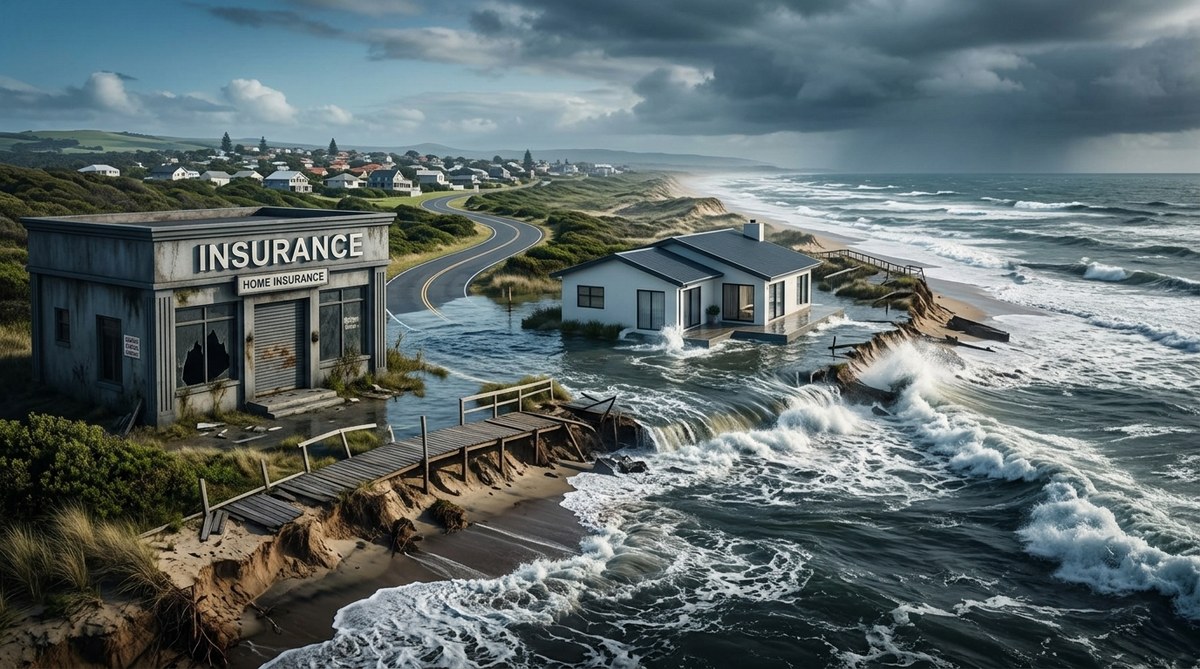
If you own a home on the coast, you have probably noticed the letters. Non-renewal notices. Premium hikes that make your head spin. In 2026, this is not just a Florida problem or a California problem. It is a nationwide signal that the risk equation has changed. The reason insurance companies are leaving coastal states comes down to one thing: the gap between what they can charge and what they have to pay out is growing too fast. And climate change is the main driver.
Insurance companies are leaving coastal states because climate change is making hurricanes and wildfires more destructive. Rising reinsurance costs and strict regulations make it hard for insurers to profit. Homeowners face fewer choices and higher premiums. The solution requires home hardening, better building codes, and serious climate action to reduce the long term risk.
The Great Retreat: What Is Happening in 2026
For decades, homeowners along the coast enjoyed relatively stable insurance markets. You paid your premium, and you rarely thought about it. That era is officially over. In 2026, major carriers are pulling out of entire zip codes in states like Florida, California, Louisiana, and South Carolina.
This retreat is not random. It is a calculated response to a handful of converging pressures:
-
Extreme weather losses. Hurricanes, wildfires, and severe convective storms are happening more often. They are also more intense. Insurers paid out record sums over the last five years, and 2026 is shaping up to follow that trend.
-
Reinsurance costs. Insurers buy their own insurance to cover catastrophic losses. This is called reinsurance. After years of massive global payouts, reinsurers have raised their prices dramatically. Those costs get passed down directly to homeowners.
-
Regulatory hurdles. In states like California, regulators have been slow to approve rate increases that reflect current wildfire risk. In Florida, a volatile litigation environment has made it difficult for companies to operate profitably. When companies cannot charge enough to cover their risk, they leave.
-
Assignment of benefits (AOB) abuse. In certain states, unscrupulous contractors have exploited loopholes to inflate claims. This has driven up costs for everyone and pushed insurers past their breaking point.
The result is a tightening market. Fewer options. Higher prices. And a lot of worried homeowners. But this is just one piece of a larger puzzle. To understand the full picture, you need to understand how climate change is redefining disaster preparedness in the US.
The Climate Connection: Why Risk Models Have Broken Down
Insurance is a business built on predicting the future. Actuaries use historical data to estimate the likelihood of a house burning down or a hurricane making landfall. For a long time, that system worked well enough.
Climate change has broken those models.
We are no longer living in a stable climate. The past is no longer a reliable guide for the future. Wildfire seasons in California are starting earlier and ending later. Hurricanes in the Atlantic are rapidly intensifying, sometimes jumping two categories in a single day.
“We are not looking at historical data anymore. We are trying to model a future that looks very different from our past. The uncertainty is too high for traditional risk models to function properly.”
Climate Risk Analyst, 2026
This uncertainty is toxic for the insurance industry. When a company cannot accurately price its risk, it has two choices. It can raise prices to an uncomfortable level, or it can stop writing policies altogether. Many are choosing the second option.
The impact varies by region. Here is a look at how different states are being affected:
| State | Primary Climate Risk | Insurer Market Response |
|---|---|---|
| Florida | Hurricanes, storm surge, flood | Major carrier pullbacks, heavy reliance on Citizens (state insurer) |
| California | Wildfires, mudslides, drought | Mass non-renewals in high fire zones, rapid FAIR Plan growth |
| Louisiana | Hurricanes, coastal subsidence, flood | Significant rate increases, high rates of non-renewal |
| South Carolina | Hurricanes, flooding, sea level rise | Pullback from coastal corridors, stricter underwriting |
This exodus is forcing cities and states to adapt very quickly. We are already seeing how climate change is forcing US cities to rethink zoning laws in 2026. Building in high risk areas is becoming harder to insure, which naturally changes where and how we build.
What This Means for Homeowners
You might be thinking, “Okay, insurance companies are leaving. That sounds bad. But how does it actually affect me?”
The effects are very real and very personal.
First, if you have a mortgage, you are required to have homeowners insurance. If private insurers will not cover you, you are forced into a state run “insurer of last resort.” These plans, like Florida’s Citizens or California’s FAIR Plan, are often more expensive and offer less coverage. They are also financially fragile. If a major disaster hits, all policyholders in the state could face special assessments to cover the shortfall.
Second, your property value can take a hit. If insurance is unavailable or unaffordable, buyers will think twice before making an offer. Homes in high risk areas are becoming harder to sell. You could be stuck with a property you cannot insure and cannot sell.
Third, the cost of living in a coastal state is rising faster than wages. For retirees on fixed incomes or young families trying to buy their first home, this insurance crisis is pushing people out.
There is good news, though. There are concrete steps you can take today to make your home more resilient. Check out our guide on how to prepare your home for climate change without breaking the bank. Even small upgrades can make a big difference in your insurability.
How to Protect Your Home and Your Wallet
You cannot control the weather. But you can control how prepared you are. Here are practical steps that underwriters are looking for in 2026.
-
Harden your home against storms. If you live in a hurricane zone, focus on your roof and openings. A fortified roof with hurricane straps, impact resistant windows, and a reinforced garage door can significantly reduce your risk. Many insurers offer premium discounts for these upgrades.
-
Create defensible space against wildfire. If you live in a wildfire zone, clear dry brush and vegetation away from your home. Use fire resistant landscaping materials. Install mesh screens over vents to prevent embers from getting inside. This is the single most effective thing you can do.
-
Elevate your home if you are in a flood zone. Flood damage is not covered by standard homeowners policies. Elevating your home above base flood elevation can drastically reduce your flood insurance premium through the NFIP or a private carrier.
-
Shop the surplus lines market. When standard carriers leave, the surplus lines market often steps in. These insurers are not regulated the same way, so they can be more flexible on pricing and risk. A good independent agent can help you find a surplus lines carrier that fits your needs.
-
Advocate for stronger building codes. This is a community level solution. Towns and cities that adopt and enforce modern building codes see lower insurance losses over time. This attracts insurers back to the market. You can make a difference by showing up at city council meetings and supporting code updates.
The link between climate change and the insurance crisis is undeniable. If you want a deeper look at the core connection, our main resource on why insurance companies are fleeing coastal states covers the full scope of the problem.
Can the Market Stabilize?
It is easy to feel hopeless when you read headlines about insurers fleeing the market. But the story is not over. There are reasons to believe the market can find a new equilibrium.
Technology is playing a bigger role. Better risk modeling using AI and satellite imagery allows insurers to price risk more accurately. This means they can offer coverage to individual homes that are well maintained, even if they are in a general risk area. They are starting to reward resilience.
Policy changes are also happening. In 2026, several states are reforming their regulatory systems to allow rates to keep pace with risk, while also demanding that insurers commit to covering high risk areas. It is a delicate balance, but progress is being made.
On a macro level, the only real solution is to address the root cause. That means harnessing technology to accelerate climate change solutions. Every ton of carbon we keep out of the atmosphere reduces the long term risk. It also means supporting innovative strategies to reduce carbon footprints in urban areas, which can help slow the warming that is driving these disasters.
How to Stay Insured in a Changing Climate
The retreat of insurance companies from coastal states is a clear warning. It is a market signal that we cannot ignore. The places we live, the way we build, and the way we prepare all have to change.
But you are not powerless. By hardening your home, understanding your risk, and engaging with your community, you can make yourself a better insurance customer. You can also advocate for the broader changes that will make the market more stable for everyone.
Take a walk around your property today. Look at your roof. Look at your gutters. Look at the vegetation near your walls. Ask yourself, “Would an insurer feel good about insuring this home?” If the answer is no, you know what to work on.
We are in this together. And the first step to solving a problem is understanding it fully. You have already taken that step by reading this. Now go out and make your home a little safer. It is the best investment you can make in 2026.