
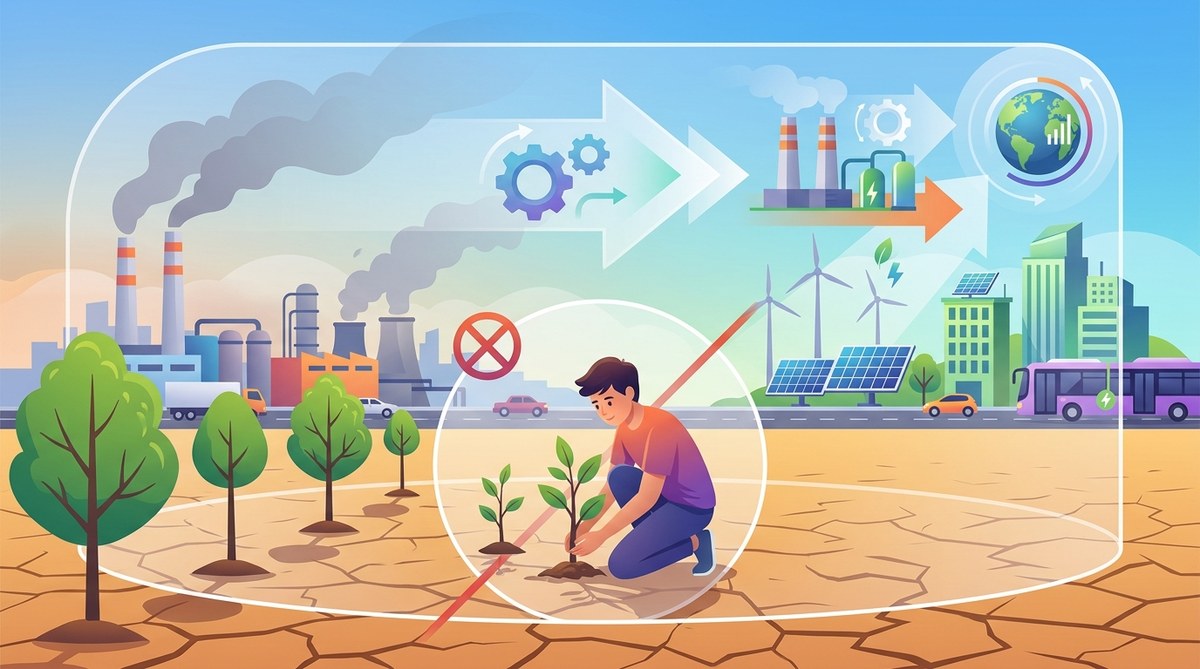
You have probably shared a tree-planting meme or donated to a reforestation campaign. It feels like the perfect green act: simple, tangible, and hopeful. But here is the uncomfortable truth that scientists and environmental groups are now shouting from the rooftops: planting trees alone will not solve climate change. In fact, it can sometimes make things worse. This article digs into the real science, the common pitfalls, and the mix of solutions we need in 2026.
Trees are important, but they are not a silver bullet. Carbon emissions are still far too high for forests to offset on their own. Many tree-planting projects fail due to poor planning, monocultures, and short-term thinking. The path forward requires cutting emissions first, protecting existing ecosystems, and pairing reforestation with renewable energy, technology, and policy changes.
The Limits of Trees as Carbon Sinks
Let us start with the good news: trees do pull carbon dioxide from the air. A mature tree can store around 48 pounds of CO₂ per year. Millions of trees can make a dent. But here is the catch—that dent is tiny compared to what we pump out.
Global CO₂ emissions in 2025 were approximately 37 billion tons. Even the most ambitious global tree-planting initiatives could only absorb a fraction of that, and it would take decades. As Dr. Susan Cook-Patton, a forest restoration scientist at The Nature Conservancy, puts it:
"We can't plant our way out of the climate crisis. The best available science shows that natural climate solutions, including reforestation, can provide about one-third of the mitigation we need by 2030. The rest must come from reducing fossil fuel use."
So trees are a piece of the puzzle, not the whole picture. We need to be honest about that.
The Big Problem: Carbon Emissions Outpace Tree Growth
Look at the numbers. The table below shows how long it would take a typical forest to offset the emissions from common sources in the United States.
| Emission Source | Annual CO₂ Equivalent (per unit) | Trees Needed to Offset (1 year) | Years for Full Offset |
|---|---|---|---|
| One passenger vehicle | 4.6 tons | ~192 | 20+ years |
| A single American's footprint | ~15 tons | ~625 | 20+ years |
| A small coal power plant | 3 million tons | 125,000 acres of forest | 40+ years |
Scaling that up to the entire country: the U.S. emitted about 5.5 billion tons in 2025. To absorb that with trees alone, we would need an area of forest roughly the size of the lower 48 states. That is not realistic. And even if we did plant that much, we would have to maintain every tree for centuries without wildfires, pests, or land-use changes.
Why Planting Trees Can Actually Backfire
A well-intentioned tree planting project can cause harm if done wrong. Here are some of the risks:
- Monoculture plantations (single species) kill biodiversity. They create a green desert that offers little habitat for wildlife and is vulnerable to diseases.
- Water competition in arid regions. Planting trees where grasslands or shrublands belong can deplete groundwater and increase fire risk.
- Albedo effect in high latitudes. Darker forests replace snow-covered tundra, absorbing more heat and actually warming the planet locally.
- Land-use conflicts. Pushing out small farmers or Indigenous communities to make room for tree plantations is ethically and socially damaging.
- Short-lived projects. Many "plant a tree" campaigns do not ensure survival. Studies show up to 90% of saplings die within a few years due to lack of care.
These pitfalls are why scientists now caution against tree planting as a simple feel-good activity. The focus should shift to forest conservation and restoration of natural ecosystems.
How to Do Reforestation Right
If we want trees to actually help, we need to follow a set of proven practices. Here are five steps to make reforestation effective:
- Protect existing forests first. Keeping standing forests intact is far more effective than planting new ones. An old-growth forest stores more carbon and biodiversity than any plantation.
- Restore native ecosystems, not just trees. Mix trees, shrubs, and grasses. Mimic what the land naturally supported before human disturbance.
- Engage local communities. Projects that involve Indigenous peoples and local landowners have much higher success rates. They bring knowledge and long-term stewardship.
- Monitor and manage for decades. Trees do not stop needing care after planting. That means watering, weeding, protecting from grazing, and replanting after losses.
- Choose the right species for the right place. Native species adapted to local soil and climate. Avoid fast-growing exotics that may become invasive.
These steps are not glamorous, but they work. Organizations that follow this playbook see survival rates above 80% and real carbon gains.
Beyond Trees: A Smarter Climate Toolkit
Trees alone cannot solve the climate crisis, but they are part of a larger toolkit. Here is what we also need in 2026:
- Aggressive cuts in fossil fuel use. The single biggest lever is switching to renewable energy. Solar and wind installations are cheaper than ever. Every new coal plant we avoid saves more carbon than a forest can absorb.
- Technological carbon removal. Direct air capture, enhanced weathering, and biochar with carbon storage are emerging tools. They are expensive now but crucial for dealing with the hardest-to-eliminate emissions.
- Policy and economic incentives. Carbon pricing, subsidies for green technology, and regulations on methane leaks can drive change faster than any voluntary program.
- Community-led adaptation. Many places are already feeling the effects of climate change. Helping communities adapt—through better infrastructure, resilient agriculture, and disaster preparedness—is just as important as mitigation.
For a deeper look at these strategies, check out how innovative technologies are transforming climate change mitigation. Also, read about why 2026 is the pivotal year for climate action in the United States. These articles explain the policies and tech breakthroughs that complement tree planting.
Your Role in 2026: Act on Multiple Fronts
As an environmentally conscious person, you likely want to do something that matters. The best approach is to stop treating tree planting as the main event and start seeing it as one part of a bigger strategy.
Here is a practical checklist:
- Support organizations that focus on forest protection and restoration, not just tree planting numbers.
- Reduce your own carbon footprint—fly less, eat less red meat, insulate your home.
- Vote for climate-forward candidates at every level.
- Advocate for renewable energy and carbon removal research in your community.
- Learn about innovative strategies to reduce carbon footprints in urban areas. Those tactics can scale up quickly.
You can also encourage your local government to invest in green infrastructure—like urban trees, but also solar panels on schools and bike lanes. The city of Austin, Texas, for example, has a combined plan that includes reforestation alongside a 100% renewable electricity goal.
Moving Forward with Honest Climate Action
Tree planting appeals to our desire for a simple solution. But we owe it to ourselves—and to the planet—to be clear-eyed about what works. Trees are valuable allies, not saviors. The real heroes are the emissions reductions we make today, the policies we pass this year, and the long-term investments in a clean energy future.
So go ahead and plant a tree this weekend. Just do it because you love the shade, the wildlife, and the beauty. But do not let it replace the harder, more essential work of cutting carbon. In 2026, we need every tool in the box. Let us use them wisely.