
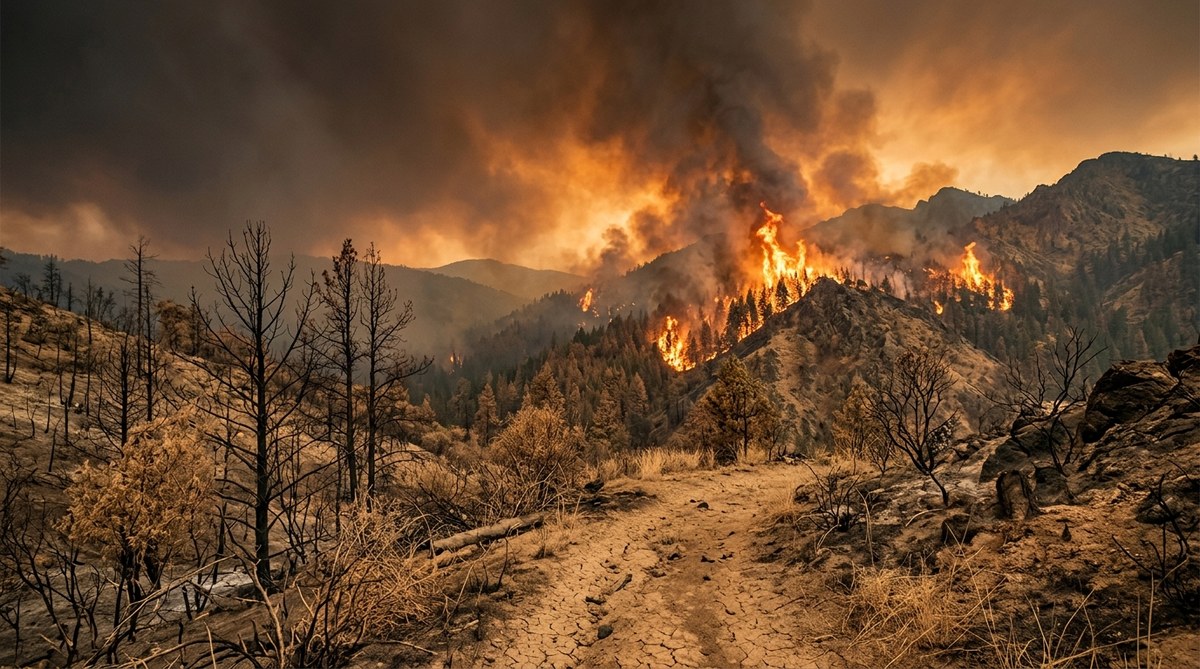
You probably remember when wildfire season was something you could mark on a calendar. In the western United States, it used to start in late summer and fade by the first good autumn rain. That is no longer the case. In 2026, the idea of a contained “fire season” feels almost nostalgic. From the foothills of California to the pine forests of Colorado, fires are sparking in January, raging through February, and smoldering into December. The reason is straightforward: climate change is fundamentally altering the conditions that allow fires to start and spread.
Climate change is the primary driver behind the lengthening of wildfire season into a year-round threat. Warmer temperatures, earlier snowmelt, and prolonged drought create dry fuel that burns in any month. Understanding this science helps homeowners, policymakers, and communities adapt through smarter land management, home hardening, and supporting renewable energy to reduce emissions.
The Old Rules of Fire Season No Longer Apply
For generations, land managers and residents in fire-prone states could predict danger periods with reasonable accuracy. The pattern was simple: dry summer heat would cure grasses and brush, and by August the landscape was ready to burn. Then came autumn rains, cooler temperatures, and the threat would subside. But that reliable rhythm has broken.
The National Interagency Fire Center now reports that the average wildfire season in the western US is roughly 80 days longer than it was in the 1970s. In some regions, the window of high fire danger has expanded by more than three months. This is not a fluctuation. It is a clear trend tied directly to a warming planet.
What Changed?
The shift comes down to three interconnected factors driven by climate change:
- Warmer air pulls moisture from plants and soil, turning living trees and damp ground into dry fuel.
- Snowpack melts earlier in the spring, meaning forests and meadows lose their moisture buffer months before summer even starts.
- Rainfall patterns have become erratic, with intense downpours followed by long, dry spells that leave vegetation brittle.
When you combine these, you get a landscape that is ready to burn almost any day of the year. A dry January in the Sierra Nevada can be just as dangerous as a dry August.
How Climate Change Creates Year-Round Fire Weather
To understand why fire season no longer takes a break, it helps to look at the specific mechanisms that climate change has supercharged.
Warmer Winters Are Not a Break
Many people assume that cold weather stops fires. That is only partly true. A deep freeze can certainly slow things down, but winters across the US have been warming. The average winter temperature in the contiguous US has risen by nearly 3 degrees Fahrenheit since the early 20th century. That might not sound like much, but it means fewer days with hard freezes. It also means less snow accumulation.
When a winter is mild and dry, the fire risk from the previous autumn carries over. Consider the Marshall Fire in Colorado, which destroyed over a thousand homes in late December 2021. It did not happen during a heatwave. It happened during what should have been a quiet winter month, fueled by dry grasses and strong downslope winds.
Earlier Snowmelt Means a Longer Dry Season
In mountain regions, snowpack acts as a natural reservoir. It keeps soils moist well into the summer. But as temperatures rise, snow melts earlier. The US Geological Survey has documented that snowpack in the western US is melting two to four weeks earlier than it did 50 years ago.
That extra month of dry conditions is critical. By June, forests that used to hold some moisture are already tinder dry. By July, they are primed for a major fire event. And because the dry period starts sooner, it also ends later. The result is a fire season that stretches from early spring to late autumn, with winter no longer offering a guaranteed reprieve.
Drought Cycles That Never Fully Recover
Climate change has also intensified drought cycles. The American West is currently experiencing a megadrought that began around the year 2000. This is not a typical dry spell. It is a long term aridification that makes it harder for landscapes to recover between rain events.
When a region is in deep drought, even a wet winter does not erase the deficit. The soil, trees, and underbrush remain stressed. A single dry week in March can create dangerous conditions. This is why you now see fire warnings issued in months that used to be considered safe.
The Feedback Loop That Makes Everything Worse
Here is where the situation gets particularly concerning. Wildfires themselves contribute to climate change, creating a feedback loop.
| Factor | How It Drives Year-Round Fire Risk | Climate Impact |
|---|---|---|
| Warmer temperatures | Dries out fuels faster | Increases atmospheric demand for moisture |
| Earlier snowmelt | Extends the dry window | Reduces summer water availability |
| Intense drought | Kills trees and weakens forests | Releases stored carbon as forests decay |
| More frequent fires | Removes vegetation that holds soil | Reduces carbon sequestration capacity |
| Fire emissions | Releases massive CO2 and black carbon | Warms the atmosphere further |
Large fires release enormous amounts of carbon dioxide. The 2023 Canadian wildfire season, for example, pumped out roughly 480 million metric tons of carbon. That is more than the annual emissions of many industrialized nations. Those emissions then trap more heat, which dries out more forests, which leads to more fires. It is a cycle that feeds itself.
“The fire season is no longer defined by the calendar. It is defined by the weather. And the weather we are seeing in 2026 is consistent with what climate models have been projecting for decades.” – Dr. A. Park Williams, climate scientist and drought expert
Practical Steps for a Year-Round Fire Threat
Knowing that climate change is driving this shift is only the first step. The next is figuring out what to do about it. Here are three practical actions that individuals and communities can take.
-
Harden your home against embers. Ember storms can travel miles ahead of a flame front. Install metal mesh screens on vents, replace wood fencing with noncombustible materials near the house, and clear dead vegetation from your roof and gutters. These steps matter even in months when you think the danger is low.
-
Create defensible space around your property. This means removing ladder fuels (low branches that can carry fire into the canopy) and keeping grass mowed short. The goal is to slow the fire down and give it nowhere to climb. Do this in spring and again in late summer.
-
Support policies that reduce emissions. Individual actions matter, but systemic change is what will slow the warming trend. Vote for candidates who prioritize climate action. Invest in renewable energy for your home. Advocate for electric heat pumps over gas furnaces. Every ton of carbon we keep out of the atmosphere helps break the feedback loop.
For more ideas on how to lower your personal impact, check out our guide on innovative strategies to reduce carbon footprints in urban areas.
Why Communities Must Adapt Now
The idea that wildfire season is a “summer problem” is dangerous. It leads to complacency during the off months. In 2026, communities from Oregon to New Mexico are revising their emergency plans to account for year-round risk. That means keeping fire crews on staff longer, maintaining evacuation plans in winter, and educating residents that a sunny February day can be just as hazardous as a blistering August afternoon.
Local governments are also rethinking building codes. New construction in fire prone zones now often requires fire resistant roofing, tempered glass windows, and ember proof soffits. These codes save lives and property, but they only work if they are enforced year round.
If you are a policymaker or concerned citizen, you can learn more about how communities can lead the way in climate change adaptation by 2026.
Understanding the Science Behind the Smoke
It is easy to feel overwhelmed by the scale of this problem. But understanding the science gives us power. We know that for every degree of warming, the atmosphere can hold about 4 percent more water vapor. That increased capacity pulls moisture out of landscapes more efficiently. We know that snowpack is declining at an average rate of 23 percent per decade in some basins. And we know that the area burned by wildfires in the western US has increased by roughly 800 percent since the 1970s.
These are not opinions. They are measured facts. The connection between climate change and the year-round wildfire threat is as solid as the connection between smoking and lung cancer.
The Role of Renewable Energy in Breaking the Cycle
One of the most effective ways to slow the warming that drives year-round fire season is to transition away from fossil fuels. Renewable energy sources like solar and wind produce no direct carbon emissions. Every solar panel installed on a rooftop or wind turbine built on a ridge reduces the amount of heat trapping gas we pump into the sky.
For a closer look at how clean energy is reshaping our future, read about the future of renewable energy and its impact on climate resilience. The transition is already underway, but it needs to accelerate.
Your Role in a Year-Round Fire World
The days of treating wildfire as a seasonal nuisance are over. Climate change has rewritten the rules. But that does not mean we are powerless. By understanding the link between a warming planet and an extended fire season, you can make smarter decisions about where you live, how you build, and what you advocate for.
Start small. Check your home for vulnerabilities this weekend. Talk to your neighbors about creating a community fire safety plan. Support local ballot measures that fund forest health projects and firefighting resources. And when you vote, remember that climate policy is fire policy.
The science is clear. The threat is year round. But so is our ability to respond.
Looking Ahead With Clear Eyes
We cannot wish away the changes that have already been set in motion. The climate system has inertia, and some warming is already locked in. But every fraction of a degree we prevent from occurring matters. It means fewer extreme fire days. It means more moisture left in the soil. It means the difference between a fire that can be contained and one that overwhelms everything in its path.
Stay informed. Stay prepared. And never assume that just because the calendar says December, the danger has passed. For more resources on how to protect your home and family, take a look at our guide on how to prepare your home for climate change without breaking the bank. The tools are available. The knowledge is here. The rest is up to us.