
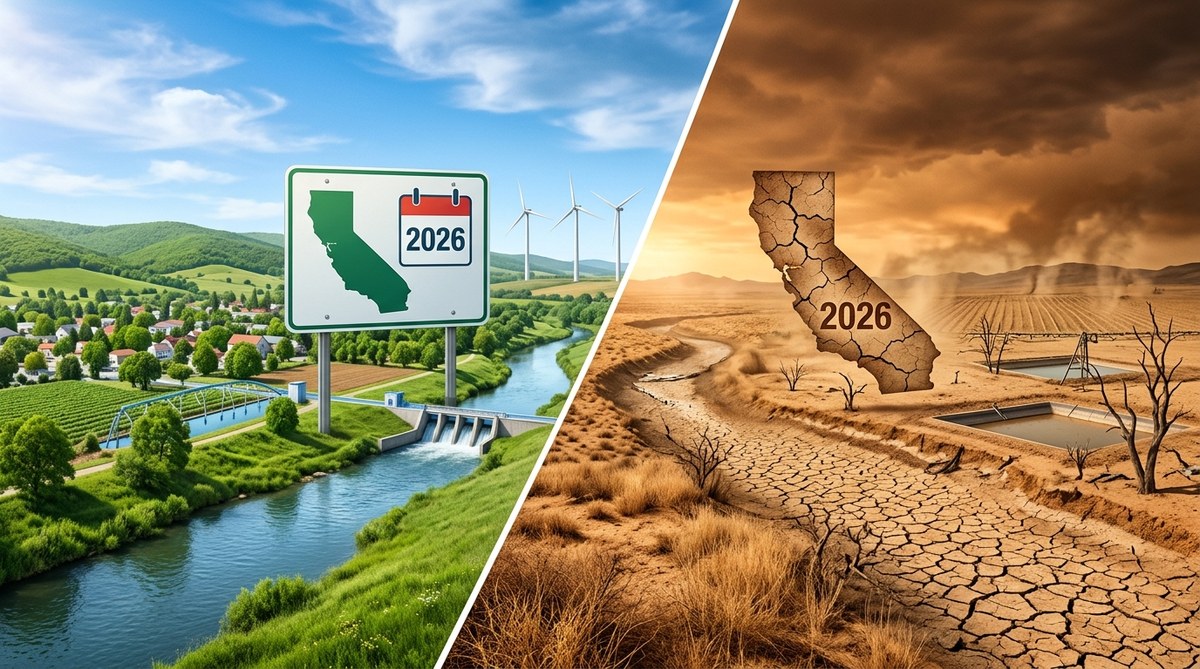
The Colorado River Basin states are all under drought declarations. Nearly nine-tenths of Oregon is covered by drought conditions. Utah just released a draft of its 2026 Water Plan for public comment. These aren’t isolated headlines. They are warning signs that the 2026 water crisis is already here, and many state drought plans are not ready to handle it. If you manage water resources, set policy, or simply worry about your community’s water future, now is the time to ask a hard question: Is your state’s drought plan built for the reality of 2026, or is it still operating on outdated assumptions?
Most state drought plans were written for a climate that no longer exists. In 2026, water managers must shift from reactive crisis management to proactive resilience. This means updating trigger thresholds, integrating real-time data, investing in decentralized water systems, and engaging communities early. Waiting for a drought declaration is too late. The time to strengthen your plan is now.
Why 2026 Demands a New Kind of Drought Plan
Traditional drought plans often rely on historical averages. They look at the past 30 years of rainfall and say, “If we get this much less, we enter stage one.” But the past is no longer a reliable guide. The American West is in its worst megadrought in 1,200 years. Groundwater basins in California, Arizona, and the High Plains are being depleted faster than they can recharge. Snowpack in the Sierra Nevada and Rocky Mountains is melting earlier each spring.
A plan built on old data will trigger responses too late. By the time a community hits a “severe drought” threshold under an outdated plan, the actual water shortage may already be catastrophic. The 2026 water crisis drought plan needs to be a living document, updated with current climate projections, not historical averages.
The Core Gaps in Most State Drought Plans
After reviewing dozens of state and local drought plans released in the last two years, a few common weaknesses stand out. These gaps can make the difference between a community that weathers a dry spell and one that runs out of water.
- Static trigger levels: Many plans use fixed percentage reductions in water supply. They do not account for multi-year compounding deficits.
- Slow activation timelines: Some plans require weeks of bureaucratic steps before emergency measures begin.
- Lack of demand-side innovation: Too many plans focus only on finding new supply, not on reducing consumption through efficiency or reuse.
- Insufficient public communication: Residents often hear about drought restrictions only after they are already in effect, leading to confusion and noncompliance.
- No integration with climate data: Plans rarely connect to real-time drought monitors or seasonal forecasts.
If your state’s plan has any of these gaps, it is not ready for 2026.
Five Steps to Audit Your 2026 Water Crisis Drought Plan
You do not need to wait for a government task force to tell you what to do. Whether you are a water resource manager or a concerned resident, you can start evaluating your local plan today. Here is a practical process to follow.
-
Gather your current drought plan document. Find the official plan for your state, county, or water district. Check the date it was last updated. If it is older than 2023, treat it with skepticism.
-
Compare your plan’s triggers against recent drought data. Look at the U.S. Drought Monitor for your region over the past five years. If your plan would not have activated until conditions were worse than anything seen since 2021, the triggers are too loose.
-
Check for demand management strategies. Does the plan include tiered water pricing, rebates for efficient fixtures, or incentives for rainwater harvesting? Plans that only restrict outdoor watering are not enough.
-
Review the public communication section. Are there templates for alerts? A schedule for community meetings? Clear guidance for residents on what to do? If this section is vague, the plan will fail when it matters most.
-
Identify the decision-making chain. Who has the authority to declare a drought emergency? How long does that process take? If it relies on a single elected official or a slow-moving board, advocate for a faster trigger mechanism.
What an Effective 2026 Drought Plan Looks Like
The best plans share a few key features. They are flexible, data-driven, and community-centered. The table below compares common mistakes with better approaches.
| Common Mistake | Better Approach |
|---|---|
| Fixed percentage triggers based on historical averages | Dynamic triggers tied to real-time reservoir levels, groundwater monitoring, and seasonal forecasts |
| One-size-fits-all restrictions for all water users | Differentiated rules for residential, commercial, agricultural, and industrial users |
| Reactive measures that start after a drought is declared | Pre-emptive conservation programs that run year-round |
| Limited public input during plan development | Regular community workshops and transparent online dashboards |
| No plan for alternative water sources | Integrated strategy including stormwater capture, recycled water, and desalination where feasible |
“The drought plans that work best are the ones that treat water conservation as a permanent habit, not a temporary sacrifice.” – Sarah K. Miller, water policy analyst and former state drought task force member
How Residents Can Push for Better Plans
You do not need to be a water manager to make a difference. Concerned residents have real power to influence local drought planning. Start by attending a city council or water board meeting. Ask when the drought plan was last updated. Request a copy of the plan and read it. If you find gaps, bring them up publicly.
You can also support local ballot measures that fund water infrastructure. Many communities have passed bonds for stormwater capture or wastewater recycling in recent years. These projects make a community more resilient to drought. For more ideas on how to get involved, check out this guide on how communities can lead the way in climate change adaptation by 2026.
On a personal level, you can reduce your own water footprint. Fix leaks, install low-flow fixtures, replace thirsty lawns with native plants, and collect rainwater for gardening. Every gallon saved reduces pressure on the system. For budget-friendly home upgrades, read about how to prepare your home for climate change without breaking the bank.
The Role of Technology in Modern Drought Planning
Technology offers powerful tools for drought management, but many plans underutilize them. Smart water meters can detect leaks in real time and show residents their usage patterns. Satellite imagery can track soil moisture and crop water use across entire watersheds. Artificial intelligence can forecast water demand based on weather patterns and economic activity.
Some cities are already using these tools. Las Vegas, for example, uses satellite data to find water wasted on overwatered lawns. Los Angeles has a real-time water use dashboard for residents. These technologies should be standard in every 2026 water crisis drought plan, not just in wealthy coastal cities. For a deeper look at how data can help, read about how innovative technologies are transforming climate change mitigation.
A Note on Equity in Drought Planning
Drought does not affect everyone equally. Low-income neighborhoods often have older pipes, higher rates of water shutoffs, and less access to green space. Agricultural communities face job losses when irrigation water is cut. Indigenous communities on the Colorado River have been fighting for decades to secure their water rights.
A good drought plan addresses these disparities. It should include assistance programs for low-income households to upgrade fixtures or pay water bills. It should involve farmers and tribal leaders in the planning process. It should ensure that when cuts are necessary, they are shared fairly. For more on this topic, see the discussion on how climate change is redefining disaster preparedness in the US.
Your State’s Plan Is a Starting Point, Not a Finish Line
The 2026 water crisis is not a future problem. It is a present reality. From the Klamath Basin to the Rio Grande, communities are already feeling the strain. The question is not whether your state will face a drought this year. It is whether your state’s plan can handle it.
The best time to fix a drought plan is before the drought hits. If you wait until the reservoirs are low and the lawns are brown, you are already behind. Use the steps in this article to start your audit today. Talk to your water manager. Attend a public meeting. Read the plan. Ask the hard questions.
Every community deserves a drought plan that protects its people, its economy, and its environment. With a little effort, yours can have one.