
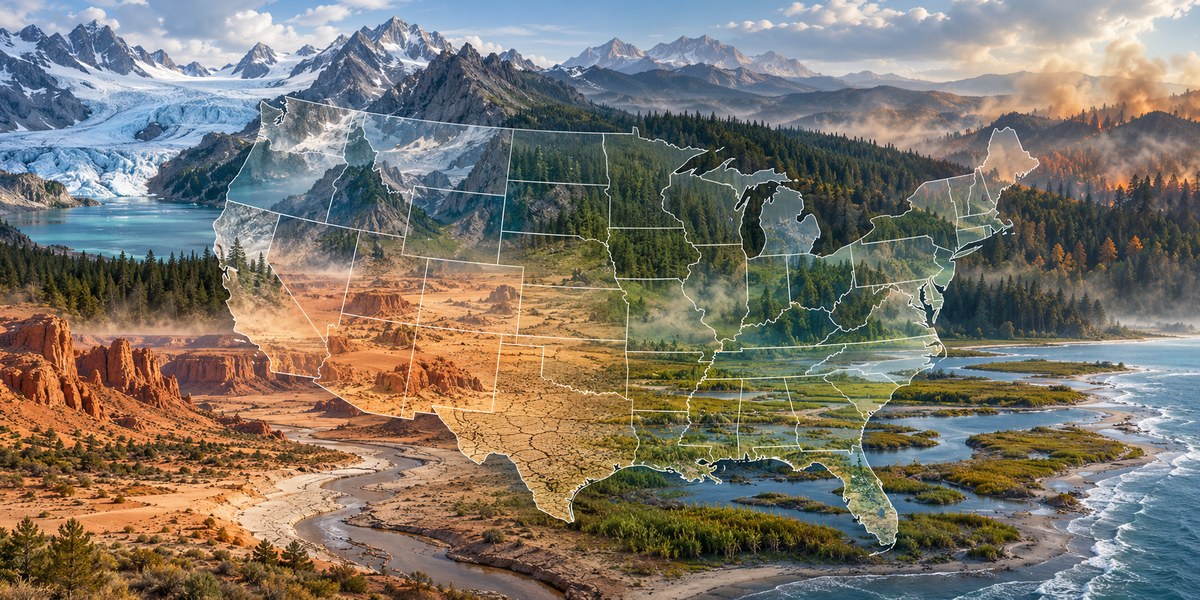
America’s national parks are more than just vacation destinations. They are living museums of natural history, places where glaciers carved valleys and ancient forests still stand. But right now, these treasured landscapes are under serious pressure. Rising temperatures, shifting rainfall patterns, and more extreme weather events are altering them in ways that scientists never predicted just a few decades ago. If you have a favorite park, chances are it is already feeling the heat.
Climate change threatens nearly every national park in the United States, but the risks vary by region. Western parks face megadrought and wildfire, while coastal parks battle sea level rise and stronger storms. Understanding these specific threats helps travelers make informed choices and support conservation efforts that protect these irreplaceable places for future generations.
A Changing Climate Hits Parks Where It Hurts
The National Park Service manages more than 400 sites across the country, and climate change does not treat them all the same. Some parks are warming at double the global average rate. Others are losing their defining features, such as glaciers or coral reefs, at an alarming pace.
A 2026 report from the National Parks Conservation Association found that 77 percent of national parks are highly vulnerable to at least one climate related threat. That is a staggering number when you consider these parks were originally set aside to be preserved “unimpaired for future generations.” The question is no longer whether climate change will affect them, but how much we are willing to lose.
The Biggest Threats Facing National Parks Right Now
Let’s break down the main climate threats by category. Each one hits different parks in different ways.
- Wildfire and drought: Western parks like Yosemite, Sequoia, and Rocky Mountain are seeing longer fire seasons and more severe burns. Drought weakens trees, making them fuel for fires that can change entire ecosystems.
- Sea level rise and coastal erosion: Parks like Everglades, Assateague Island, and Cape Hatteras are literally losing ground. Higher seas flood freshwater habitats and wash away nesting sites for sea turtles and shorebirds.
- Glacier retreat and snowpack loss: Glacier National Park could lose all its namesake glaciers within a decade. Parks in the Sierra Nevada and Rockies depend on snowpack for water, but warmer winters mean less snow and earlier melt.
- Heat stress and ecosystem shifts: Saguaro National Park in Arizona is seeing its iconic cacti struggle to survive record heat waves. In Alaska, warming permafrost is causing entire landscapes to slump and slide.
How to Check on Your Favorite Park
If you are planning a trip in 2026, you can take a few practical steps to understand what is happening at the park you want to visit. Here is a numbered process to help you stay informed.
- Visit the National Park Service website for your park. Every park has a “Nature and Science” page that includes recent climate data and research. Look for reports on air quality, water levels, and species health.
- Check the park’s alerts page. Many parks now post real time updates about trail closures due to wildfire, flooding, or extreme heat. This is especially important for summer visits.
- Read the park’s Climate Change Response Plan. Larger parks like Yellowstone and Grand Canyon have published detailed strategies. These documents tell you exactly which resources are most at risk and what the park is doing about it.
What the Data Shows: A Regional Breakdown
To give you a clearer picture, here is a table showing how different regions are being affected by climate change. Use this as a reference when choosing where to travel or how to prepare.
| Region | Primary Threat | Example Park | Impact on Visitors |
|---|---|---|---|
| Pacific Northwest | Warmer rivers, less snow | Olympic National Park | Salmon runs decline, glaciers shrink |
| Southwest | Megadrought, extreme heat | Grand Canyon National Park | Reduced river flows, heat advisories |
| Southeast | Sea level rise, stronger hurricanes | Everglades National Park | Saltwater intrusion, trail damage |
| Alaska | Permafrost thaw, coastal erosion | Denali National Park | Unstable ground, changing wildlife patterns |
| Rocky Mountains | Snowpack loss, wildfire | Rocky Mountain National Park | Shorter ski seasons, smoky summers |
“We are seeing changes that we once thought would happen in 100 years happening in just 20 or 30. The parks are our early warning system for the rest of the country.” — Dr. Sarah Whitaker, climate scientist and former NPS advisor
Why Some Parks Are More Vulnerable Than Others
Not every park faces the same level of risk. Geography plays a huge role. Parks in the arid Southwest are dealing with a different set of problems than parks on the Gulf Coast. Elevation matters too. High altitude parks like Mount Rainier are warming faster than lowland parks because of a phenomenon called elevation dependent warming.
But there is another factor: park size and management resources. Large, well funded parks like Yellowstone have entire teams dedicated to climate adaptation. Smaller parks, especially those run by private partners or with limited budgets, often lack the staff to monitor changes or implement solutions.
How You Can Help
You do not have to be a scientist or a park ranger to make a difference. Here are a few things you can do on your next visit.
- Leave no trace. This is the golden rule. Pack out everything you bring in. Even small amounts of trash can harm stressed ecosystems.
- Stay on designated trails. Off trail hiking damages fragile soil and plant communities that are already fighting to survive.
- Reduce your carbon footprint on the road. Consider driving an electric vehicle or offsetting your travel emissions. Many parks now have EV charging stations.
- Support park conservation groups. Organizations like the National Parks Conservation Association and the Sierra Club work directly with the NPS on climate resilience projects.
Looking Ahead: What Parks Are Doing to Adapt
Park managers are not sitting still. Across the country, national parks are taking creative steps to protect their resources.
Glacier National Park has installed temperature sensors and cameras to monitor ice loss in real time. The data helps scientists predict when trails will be safe and which species need extra protection.
In the Everglades, engineers are working on massive freshwater restoration projects to push back against saltwater intrusion. They are also replanting mangroves, which act as natural storm barriers.
At Sequoia National Park, crews are using controlled burns and thinning treatments to reduce wildfire risk. They are also planting sequoia seedlings in cooler, wetter microclimates where the trees are more likely to survive the next century.
These efforts are promising, but they require ongoing funding and public support. That is where visitors like you come in. When you visit a park, pay the entrance fee. Buy a pass. Volunteer for a trail cleanup. Every bit of support helps.
Planning a Climate Aware Visit in 2026
If you are heading to a national park this year, keep these tips in mind.
- Check the weather forecast for the specific elevation. A park like Grand Teton can have snow at the top and 80 degree temperatures at the base.
- Bring extra water and sun protection. Heat waves are becoming more common even in parks known for cooler climates.
- Be flexible. If a trail is closed due to fire or flood, have a backup plan. Rangers can suggest alternative routes.
- Visit in the shoulder season. Spring and fall often have milder weather and smaller crowds, which puts less strain on park infrastructure.
The Parks Worth Fighting For
Every national park has a story. Some are stories of ancient geology, like the carved canyons of Zion. Others are stories of resilience, like the regrowth of forests after a fire. Climate change is adding a new chapter to those stories, one that we are writing together.
The good news is that we still have time to protect these places. By staying informed, traveling responsibly, and supporting conservation efforts, we can help ensure that the parks we love today are still there for our kids and grandkids.
If you want to learn more about how climate change is reshaping communities and ecosystems across the United States, check out our guide on how communities can lead the way in climate change adaptation by 2026. For a deeper look at the technologies helping us fight back, read about how innovative technologies are transforming climate change mitigation.
The next time you stand at the rim of the Grand Canyon or walk through a grove of giant sequoias, take a moment to appreciate what is at stake. Then take action. These parks have been here for millions of years. With our help, they can survive the next hundred too.