
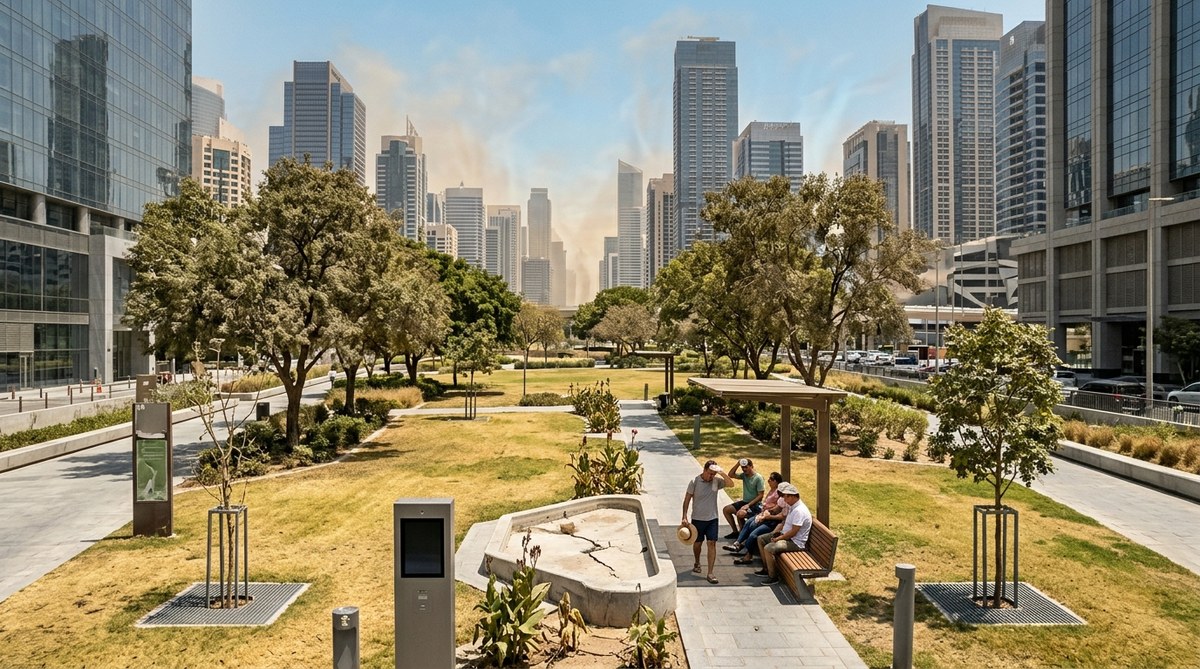
You step outside on a July afternoon in 2026. The air shimmers. The concrete radiates heat like a brick oven. You walk toward the city park, hoping for relief under a canopy of old oaks. But the grass is dry. The bench is hot. The breeze feels like a hair dryer. That patch of green you counted on is not cooling you down. It is a mirage of comfort, and it is failing you when you need it most.
Many urban green spaces are not designed to handle extreme heat. Poor tree placement, lack of water, and surrounding pavement create microclimates that are often hotter than the streets themselves. To function as true climate refuges, parks need strategic shading, permeable surfaces, and active cooling features like misting stations or native ground cover. Understanding these failures helps you advocate for better design in your own neighborhood.
The Promise of Green Spaces That Is Breaking
We have been told that parks are the lungs of the city. They lower temperatures. They absorb stormwater. They give us a place to breathe when the world feels like it is closing in. And for decades, that was mostly true. A well-designed park could be five to ten degrees cooler than the surrounding blocks.
But the climate we live in now is not the climate our parks were built for.
Heat waves in 2026 are longer, more intense, and arrive earlier in the season. Many cities in the United States have already broken records for consecutive days above 100 degrees Fahrenheit. When the temperature stays that high for that long, a simple patch of grass stops working the way it used to. The soil dries out. The grass goes dormant. The trees close their stomata to conserve water, which means they stop transpiring and stop cooling the air.
The very mechanism that made parks cool has shut down.
Three Reasons Your Local Park Feels Like a Pizza Oven
There is no single reason why green spaces are failing as climate refuges. It is a combination of design choices, budget limits, and the simple physics of extreme heat. Here are the three biggest culprits.
1. The Wrong Trees in the Wrong Places
Not all trees are created equal when it comes to cooling. A mature maple with a wide, dense canopy can block up to 90 percent of solar radiation. A young palm tree or a crepe myrtle provides almost no shade at all. Many cities, especially those in the Sun Belt, have planted ornamental species that look nice but do not cast meaningful shadows.
Even when the right trees are present, they are often placed next to dark pavement or large expanses of turf grass. The heat absorbed by those surfaces radiates back up into the canopy, canceling out much of the cooling benefit.
2. Water Is the Missing Ingredient
A living, transpiring tree can move hundreds of gallons of water from the soil into the air each day. That process, called evapotranspiration, is what actually cools the surrounding air. But during a drought or a heat wave, the soil dries out. Without water, the tree cannot transpire. It goes into survival mode.
Many municipal parks do not have irrigation systems designed for extended dry periods. They rely on rainfall, which is becoming less reliable across the United States. By the third week of a heat wave, the park is essentially a desert with grass-colored gravel.
3. The Pavement Trap
The average city park is surrounded by asphalt parking lots, concrete sidewalks, and dark rooftops. These surfaces absorb heat during the day and release it slowly at night. This is the urban heat island effect. A park that is only a few acres wide cannot overcome the heat radiating from miles of surrounding pavement.
In some cases, the park itself contains too much hardscape. Plazas, amphitheaters, and walking paths made of dark materials heat up and store energy. You might be standing on grass, but you are still surrounded by a bowl of stored heat.
What a Real Climate Refuge Looks Like
Some cities are getting it right. They are redesigning parks to function as actual cooling centers during extreme weather events. Here is a comparison of the old approach versus the new approach.
| Feature | Old Approach (Failing) | Climate Refuge Approach (Working) |
|---|---|---|
| Tree selection | Ornamental or young trees with small canopies | Mature, native species with broad, dense crowns |
| Ground cover | Monoculture turf grass | Native grasses, clover, or moss that stays green with less water |
| Irrigation | Rain-fed or minimal sprinklers | Subsurface drip irrigation connected to greywater or stormwater capture |
| Hardscape | Dark asphalt paths and concrete plazas | Permeable pavers in light colors that reflect heat |
| Shade structures | None or minimal | Shade sails, covered pavilions, and misting stations |
| Water features | Decorative fountains that recirculate water | Splash pads and wading pools that actively cool the air |
| Surrounding buffer | No buffer from pavement | Green corridors or cool pavement treatments on adjacent streets |
A Step-by-Step Plan to Fix Your Local Park
You do not have to wait for the city government to act. Community groups and neighborhood associations can push for changes that make a real difference. Here is a practical process that has worked in cities from Austin to Minneapolis.
-
Audit the shade. Walk the park at noon on a sunny day. Mark where the shadows fall. If more than half the seating areas or playground equipment is in direct sun, that is a problem. Take photos and share them with your parks department.
-
Check the soil moisture. Dig down a few inches in several spots. If the soil is dry and cracked, the park is not supporting healthy plant life. Dry soil cannot cool the air. Use this data to argue for better irrigation or drought-tolerant ground covers.
-
Measure the surface temperature. Use an infrared thermometer (they cost around $20) to measure the temperature of the grass, the paths, and the benches. Compare those readings to the air temperature. A surface that is 20 degrees hotter than the air is a sign of poor design.
-
Identify the heat sources. Look for dark rooftops, blacktop parking lots, or large concrete plazas within 100 feet of the park. These are the heat engines that overwhelm the cooling power of the green space. Document them on a map.
-
Propose a fix. Pick one change that would have the biggest impact. Maybe it is planting a row of oaks along the western edge to block afternoon sun. Maybe it is replacing a section of asphalt with a rain garden. Present your findings to the city council or parks board with a clear ask.
-
Fund it. Many cities have sustainability grants, stormwater utility credits, or federal funding from the Inflation Reduction Act that can pay for green infrastructure. Find the money and apply.
Why Planting Trees Alone Cannot Save Us
There is a popular idea that if we just plant enough trees, we can fix the urban heat problem. That idea is dangerously incomplete. Trees need water to cool the air. They need space for their roots. They need time to grow. A sapling planted today will not provide meaningful shade for a decade.
“We have to stop thinking of trees as a silver bullet. They are part of a system that includes soil health, water management, and building design. A tree planted in a dry, compacted parking lot is not a climate solution. It is a landscaping expense.” — Dr. Lina Mendez, urban ecologist at the University of Texas
The focus on tree planting alone has led to a situation where cities celebrate planting 10,000 trees while those trees die within three years because nobody planned for watering them during a drought. That is not climate resilience. That is greenwashing.
The Hidden Danger of Green Gentrification
There is another layer to this problem that does not get enough attention. When a city builds a beautiful, high-functioning park, property values around it go up. That sounds good until you realize that the people who need that park the most are often pushed out.
Low-income neighborhoods and communities of color already have less tree canopy and more pavement. They are the ones suffering the most from the urban heat island effect. When a new park is built as a climate refuge, it should stay accessible to the people who live there. But rising rents often force them to move.
A true climate refuge is not just cool. It is equitable. It stays affordable. It is designed with input from the people who will use it, not just the landscape architects who draw it.
What You Can Ask Your City to Do
If you are ready to advocate for change, here is a short list of demands that actually work. Bring these to your next neighborhood meeting or city council hearing.
- Require all new parks to include a shaded area that is at least 50 percent of the total space.
- Mandate cool pavement materials for any path or plaza within a park.
- Install irrigation systems that use captured rainwater or recycled greywater.
- Create a heat vulnerability map that identifies which neighborhoods need cooling interventions most urgently.
- Fund a park steward program that pays local residents to maintain trees and water plants during heat waves.
- Ban the use of dark asphalt in any park renovation project.
The Future of Cooling Is Not Just Green
We are starting to see new technologies that can help. Cool paints that reflect sunlight. Smart irrigation controllers that adjust watering based on soil moisture sensors. Permeable pavers that let water soak into the ground instead of running off. These tools are not science fiction. They are available right now.
But technology alone will not fix the problem. The real shift has to happen in how we think about green spaces. They are not decorations. They are not amenities. They are critical infrastructure, just as important as water pipes and power lines. And they need to be funded, maintained, and designed with that level of seriousness.
If you want to see how these ideas connect to broader urban sustainability, check out some innovative strategies for achieving urban sustainability in the 21st century. The same principles that make a park work as a climate refuge also apply to entire neighborhoods.
Rethinking the Role of Your Neighborhood Park
The next time you walk through your local park, look at it with new eyes. Is the grass green or brown? Are the trees casting real shadows or just dappled light? Are there places where you could sit comfortably for an hour on a 100-degree day? If the answer is no, that park is not serving its purpose.
That does not mean you have to give up on it. It means you have to demand more. Your city has the tools and the knowledge to build green spaces that actually work as climate refuges. What it needs is the political will and the public pressure to make it happen.
Start small. Talk to your neighbors. Measure the heat. Show up at a meeting. The parks we have right now are failing us, but the parks we build next do not have to.