
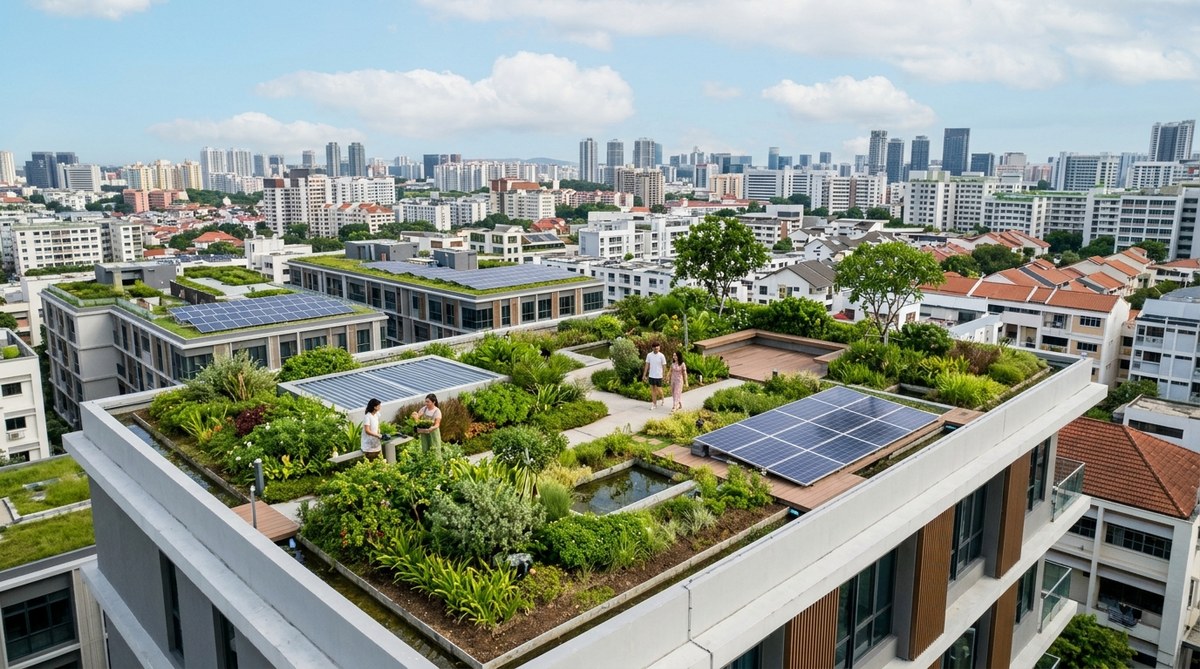
Your city is a heat sponge. On a scorching July afternoon, the dark asphalt and tar roofs in your neighborhood can reach temperatures of 150 degrees Fahrenheit or more. That heat doesn’t just disappear at sunset. It radiates back into the streets all night, making it harder for everyone to sleep, pushing air conditioning bills through the roof, and creating dangerous conditions for vulnerable residents. Meanwhile, when a heavy rain hits, all that hard surface sends water rushing into overwhelmed storm drains, leading to flooded basements and polluted waterways. There is a better way to build, and it starts with the one surface we often ignore: the roof.
Green roofs are not just an environmental trend. They are a proven, cost-effective tool for climate adaptation that lowers urban temperatures, absorbs stormwater, reduces energy use, and creates habitat. This guide explains how they work, how to get one built, and why 2026 is the year your city should start taking its rooftops seriously.
What Makes a Rooftop a Climate Adaptation Tool
A green roof is essentially a garden on top of a building. But it is much more than decoration. The layers of soil, drainage material, and plants create a living membrane that changes how a building interacts with its environment. Instead of baking in the sun, a green roof stays cool because the plants release moisture through a process called evapotranspiration. Instead of sending every drop of rain into the sewer, the soil and roots hold onto that water and release it slowly.
This dual action makes green roofs one of the most effective strategies for tackling two of the biggest climate threats facing American cities: extreme heat and flash flooding. They also improve insulation, which cuts heating and cooling costs, extend the life of the roof membrane, and provide a patch of green space in dense urban areas where parks are scarce.
How Green Roofs Fight the Urban Heat Island
The urban heat island effect happens when natural surfaces like soil and vegetation are replaced with concrete, asphalt, and dark roofing materials. These materials absorb solar energy and release it as heat. A study from the city of Chicago found that green roofs can be 30 to 40 degrees cooler than conventional roofs during the summer. When enough buildings in a neighborhood have green roofs, the entire area stays cooler.
This is not just about comfort. Extreme heat is the deadliest weather-related hazard in the United States. It kills more people each year than hurricanes, tornadoes, or floods. Reducing the temperature of a neighborhood by just a few degrees can prevent heatstroke, reduce emergency room visits, and lower the risk of power outages during heat waves. For urban planners and sustainability officers, green roofs are a public health intervention as much as an environmental one.
Stormwater Management That Actually Works
Every time a storm rolls through a city, millions of gallons of water hit impervious surfaces. That water picks up oil, fertilizer, pet waste, and trash before dumping into local rivers and lakes. In many older cities, the sewer system cannot handle the volume, so untreated sewage overflows directly into waterways.
Green roofs intercept rainfall at the source. A typical extensive green roof with four inches of growing medium can absorb 50 to 80 percent of annual rainfall. The water that does run off is delayed and filtered. This reduces the peak flow that overwhelms storm drains and gives treatment plants more time to process the water.
Cities like Portland, Oregon, and Washington, D.C., now offer stormwater fee credits for property owners who install green roofs. The financial incentive makes the investment more attractive for commercial building owners and homeowners alike.
A Practical Guide to Getting a Green Roof Built
If you are an urban planner, a sustainability officer, or a city resident who wants to see more green roofs in your neighborhood, here is a step by step process for making it happen.
-
Assess the structural capacity of the building. A green roof is heavy. A simple extensive green roof with shallow soil adds about 15 to 30 pounds per square foot when saturated. An intensive green roof with deeper soil and larger plants can weigh 80 pounds per square foot or more. You need a structural engineer to evaluate the roof deck and determine what is safe.
-
Choose the right type of green roof for the building. Extensive green roofs use shallow soil and hardy plants like sedum and moss. They are lightweight and low maintenance. Intensive green roofs have deeper soil and can support shrubs, small trees, and even vegetable gardens. They require more structural support and ongoing care.
-
Select a waterproofing and drainage system. A high quality waterproof membrane is critical. It must be root resistant and durable. Above that, you need a drainage layer to move excess water away from the plant roots and prevent pooling.
-
Pick plants that will survive your local climate. Native and drought tolerant species are usually the best choice. They require less water, resist pests better, and provide food and shelter for local pollinators. A local nursery or green roof consultant can help you select the right mix.
-
Plan for irrigation and maintenance. Even drought tolerant plants need water during the establishment period. After the first year or two, many extensive green roofs can survive on rainfall alone, but a backup irrigation system is wise during extended dry spells. Weeding, fertilizing, and replacing dead plants are part of the long term care plan.
-
Work with local permitting and incentive programs. Many cities have streamlined the permitting process for green roofs. Check with your local building department and sustainability office to see if grants, tax abatements, or stormwater fee credits are available.
Common Mistakes and How to Avoid Them
| Mistake | Why It Fails | The Fix |
|---|---|---|
| Skipping the structural assessment | Roof collapses or leaks develop | Hire a structural engineer before designing |
| Using the wrong soil mix | Soil compacts, roots rot, plants die | Use a lightweight, engineered growing medium |
| Choosing non native plants | High water needs, poor survival rates | Select regionally appropriate, hardy species |
| Ignoring drainage | Water pools, kills roots, damages building | Install a proper drainage layer and overflow outlets |
| Underestimating maintenance | Weeds take over, irrigation fails | Budget for professional maintenance in year one |
| Forgetting to check incentives | Missed financial support | Contact local sustainability office before starting |
The Difference Between Extensive and Intensive Green Roofs
Understanding the two main types of green roofs helps you match the right system to the right building.
-
Extensive green roofs: Soil depth of 3 to 6 inches. Plants are low growing succulents, grasses, and mosses. Weight is low. Cost is moderate. Maintenance is minimal. Ideal for large commercial buildings, schools, and residential projects where roof access is limited.
-
Intensive green roofs: Soil depth of 8 inches or more. Plants include shrubs, perennials, and small trees. Weight is high. Cost is higher. Maintenance is regular. Ideal for buildings where the roof will be used as a garden, patio, or community space.
-
Semi intensive green roofs: A middle ground with 6 to 8 inches of soil. Supports a wider variety of plants than extensive systems but weighs less than intensive. A good option for buildings that want more biodiversity without the full structural retrofit.
Expert Advice on Long Term Success
“The biggest mistake I see is people treating a green roof like a regular garden. It is not. It is a engineered system that has to survive extreme wind, sun exposure, and limited soil depth. You cannot just throw dirt and plants on a roof and hope for the best. Work with a professional who understands green roof design, and budget for at least two years of careful maintenance.” – Dr. Elena Torres, urban ecologist and green roof consultant based in Philadelphia.
That advice rings true. A green roof that is designed well and maintained properly will last 40 to 50 years. A green roof that is neglected can fail in the first season. The difference is planning.
Why 2026 Is the Right Time to Act
Several factors are aligning right now. Federal funding from the Inflation Reduction Act and the Infrastructure Investment and Jobs Act is still flowing to cities for climate resilience projects. Many states have updated their building codes to encourage or require green roofs on new construction. Public awareness of heat and flood risks is higher than ever. And the technology has matured. The materials are better, the installation methods are proven, and the cost has come down.
Cities like New York, Denver, and San Francisco have already adopted green roof policies. If your city has not, now is the time to start the conversation. Property owners who act now can lock in lower utility bills, higher property values, and a tangible contribution to their community’s climate resilience. For more on how local policy is shifting, check out how climate change is forcing US cities to rethink zoning laws in 2026.
Your City’s Rooftops Are Waiting
The rooftop above your head is more than a cover from the rain. It is an opportunity. Every flat roof in your city is a potential piece of climate infrastructure. When you add a green roof, you are not just decorating a building. You are cooling the block, cleaning the air, slowing down a flood, and creating a tiny ecosystem in the middle of a concrete desert.
Start small if you need to. A single green roof on a community center or a school can be a demonstration project that inspires others. Talk to your neighbors, your city council member, and your local sustainability office. Share this guide. And if you want to understand the bigger picture of how urban surfaces affect your local climate, read about why your city’s heat island effect is making climate change worse.
The next frontier in climate adaptation is not a new technology. It is the space we already have. We just need to use it better.