
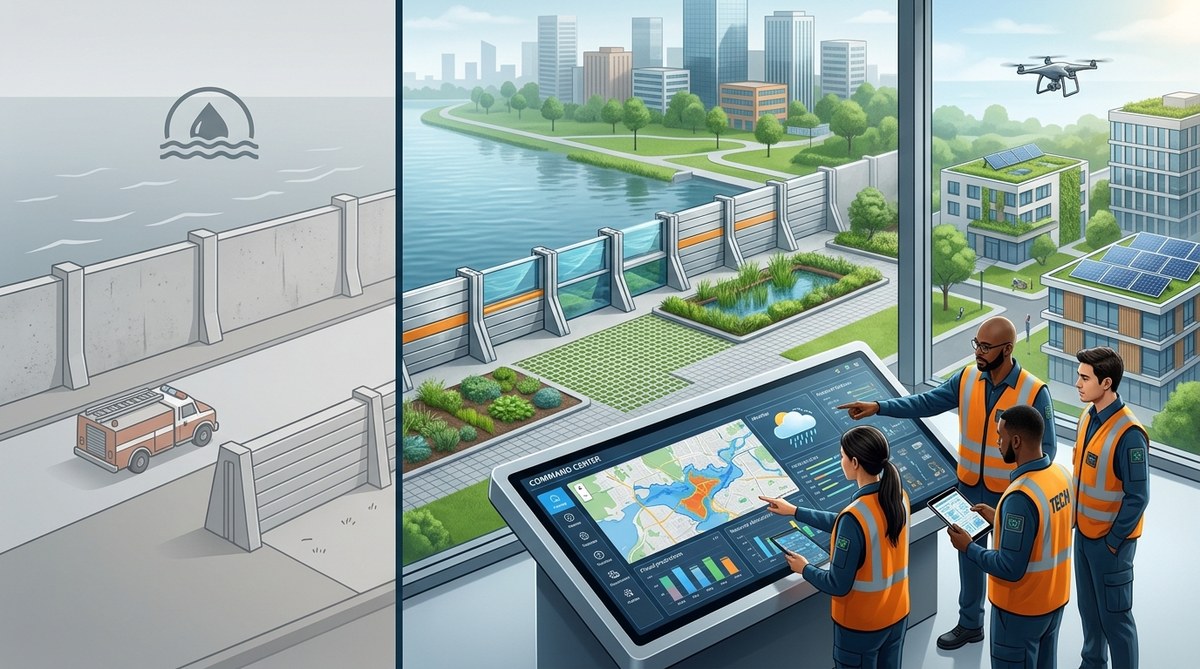
The old disaster playbook is collecting dust. For decades, emergency managers could rely on seasonal patterns, historical data, and relatively predictable risk zones. Those days are behind us. In 2026, a hurricane can slam the Pacific Northwest, a heatwave can blanket the Midwest for weeks, and a wildfire can tear through the urban interface of a city that never saw flames before. Climate change has torn up the old calendar and rewritten the rules. For emergency management professionals and policy makers, this shift demands a complete rethink of how we prepare, respond, and rebuild.
Climate change is erasing traditional disaster seasons and expanding risk zones across the US. Emergency managers must shift from reactive playbooks to adaptive, data driven strategies. This guide covers the new threat landscape, practical planning frameworks, common pitfalls to avoid, and the policies shaping resilient communities in 2026. The goal is not just to survive the next disaster but to build systems that bend without breaking.
The Old Seasons No Longer Apply
FEMA officials have publicly stated that terminology like “wildfire season” or “tornado alley” no longer reflect reality. In 2025, the agency recorded billion dollar disaster events in every calendar month for the first time. That pattern is continuing into 2026. When every month is a potential disaster month, the concept of a “preparedness season” becomes meaningless.
The core problem is straightforward. Warmer air holds more moisture, which fuels heavier rainfall and stronger storms. Warmer oceans supercharge hurricanes. Drier landscapes and higher temperatures extend wildfire windows. These changes compound, overlap, and create cascading emergencies that hit communities previously considered low risk.
For a policy maker in Nebraska or a planner in Vermont, the message is the same. No region is immune. The question is not whether your community will face a climate intensified disaster. It is whether your systems are ready for one.
A Look at the New Threat Landscape
Here are the major ways climate change is reshaping disaster risk across the United States.
- Expanded wildfire zones. Fires now burn in the Appalachians, the Great Lakes region, and even parts of the Northeast. The concept of a safe zone is shrinking.
- Intensified rainfall and flooding. Storms that used to be classified as “once in a century” events now arrive every few years. Urban drainage systems designed for 20th century rainfall are overwhelmed.
- Stronger hurricanes with slower movement. Hurricanes linger over coastal areas longer, dumping catastrophic rainfall far inland. The damage radius is growing.
- Extreme heat as a chronic disaster. Heat is now the leading weather related cause of death in the US. It strains power grids, harms outdoor workers, and hits vulnerable populations hardest.
- Compound events. A hurricane knocking out power during a heatwave. A wildfire followed by a flash flood. These overlapping events stress response systems to the breaking point.
Building a New Preparedness Framework
Shifting from a reactive mindset to an adaptive one requires concrete steps. Emergency managers and policy makers can use the following five stage process to reassess and strengthen their disaster preparedness strategies.
-
Conduct a climate stress test. Do not just rely on historical data. Run your plans against projected climate scenarios for 2030 and 2050. What happens if your region sees 20 percent more rainfall or a 10 degree temperature increase? Identify where your current systems fail.
-
Redraw your risk maps. Work with state climatologists and federal partners to update hazard zones. Include wildfire risk in areas previously considered low risk. Factor in inland flooding from hurricanes. Update your evacuation routes accordingly.
-
Invest in flexible infrastructure. Gray infrastructure like seawalls and levees still has a role, but green infrastructure offers more adaptability. Rain gardens, permeable pavements, restored wetlands, and urban tree canopies reduce flood and heat risk while providing community benefits. Learn more about how communities are adopting these approaches in our guide on how communities can lead the way in climate change adaptation by 2026 https://localcooling.com/how-communities-can-lead-the-way-in-climate-change-adaptation-by-2026/).
-
Build community partnerships. Preparedness cannot rest solely on government agencies. Partner with local businesses, nonprofits, schools, and faith based organizations. These networks provide trusted communication channels and surge capacity during emergencies.
-
Practice scenario based exercises. Run tabletop exercises that include compound disaster scenarios. Practice a hurricane followed by a heatwave. Practice a wildfire that threatens a chemical plant. These exercises reveal gaps that standard drills miss.
Common Mistakes and Better Alternatives
Even well intentioned planning efforts can miss the mark. The table below outlines frequent pitfalls in climate change disaster preparedness and the strategies that work better.
| Common Mistake | Why It Fails | Better Alternative |
|---|---|---|
| Planning for the average event | Averages hide extremes. A storm that drops 4 inches of rain may strain your system, but a storm that drops 12 inches will break it. | Design for the upper bounds of projected scenarios, not the middle. |
| Ignoring social vulnerability | Wealthy neighborhoods often recover faster. Low income and minority communities bear disproportionate harm. | Prioritize resources for the most vulnerable populations first. This strengthens the whole community. |
| Using static risk maps | Risk changes year by year. A map from 2020 is already outdated in many regions. | Update risk assessments annually. Use real time climate data and modeling. |
| Focusing only on response | Reaction alone is expensive and exhausting. Every dollar spent on mitigation saves six dollars in recovery costs. | Invest in pre disaster mitigation. Strengthen building codes, protect natural buffers, and fund home hardening programs. |
| Going it alone | No single agency has the resources or expertise to handle climate driven disasters alone. | Build cross sector coalitions. Include utilities, healthcare systems, transportation agencies, and private sector partners. |
“We can no longer prepare for the last disaster. We have to prepare for the next one, and the one after that. Climate change means the baseline is shifting every year.” This advice from a former FEMA regional director captures the mindset required for 2026 and beyond.
The Policy Tools That Drive Real Change
Policy makers have a unique responsibility and a powerful set of levers. The right policies can multiply the impact of every preparedness dollar. The wrong ones can leave communities exposed.
Zoning and Land Use
One of the most effective tools is land use policy. Allowing new construction in floodplains or high risk fire zones simply sets the stage for future disaster. Policy makers can adopt stricter zoning codes, require elevated building standards, and offer buyout programs for repeatedly damaged properties. These measures reduce long term risk and lower the financial burden on federal disaster funds.
Funding for Resilience
The Bipartisan Infrastructure Law and the Inflation Reduction Act have channeled billions into climate resilience. In 2026, key programs include FEMA’s Building Resilient Infrastructure and Communities (BRIC) grants and the Community Disaster Resilience Zones (CDRZ) initiative. These programs prioritize underserved communities and fund projects from flood control to microgrid installation. Policy makers should actively pursue these resources and ensure they reach the neighborhoods that need them most.
Integrating Renewable Energy
A resilient community needs reliable power. Extreme weather events routinely knock out centralized grids. Distributed energy systems, including solar microgrids and battery storage, can keep critical facilities running during outages. Communities looking to pair preparedness with climate goals can find practical approaches in our piece on the future of renewable energy and its impact on climate resilience https://localcooling.com/the-future-of-renewable-energy-and-its-impact-on-climate-resilience/).
Early Warning and Communication
Technology has advanced rapidly. Smartphone alerts, reverse 911 systems, and wireless emergency alerts can reach millions in seconds. But technology only works if people trust the message. Policy makers should invest in community based communication strategies that use local leaders, multilingual messaging, and culturally relevant channels. A warning that is not heard is not a warning at all.
Choosing the Right Tools and Technologies
Emergency managers today have access to tools their predecessors could only dream of. But tools alone do not guarantee success. The key is matching the right tool to the right problem.
For situational awareness, platforms that integrate real time weather data, traffic feeds, and social media monitoring give incident commanders a clearer picture. For long term planning, climate modeling software helps project future risks. For community engagement, mobile apps and text based systems keep residents informed before, during, and after an event.
However, technology should never replace human judgment and local knowledge. The best systems combine data with the lived experience of people who know their neighborhoods. For more on how innovative technologies are reshaping climate action, see our article on harnessing technology to accelerate climate change solutions https://localcooling.com/harnessing-technology-to-accelerate-climate-change-solutions/).
What Success Looks Like in 2026
Picture a community that has embraced climate informed preparedness. Their flood maps are updated annually. Their schools double as cooling centers. Their fire department has equipment rated for longer, hotter wildfire seasons. Their hospitals have backup power that can run for days, not hours. Their most vulnerable residents are registered in a care coordination database so social workers can check on them during extreme heat events.
That community did not arrive there by accident. It was built through deliberate policy, consistent funding, and a willingness to adapt. The communities that invest now in climate change disaster preparedness will not only weather the next storm better. They will recover faster, spend less, and protect more lives.
A Unified Approach to a Changing World
Disaster preparedness in the age of climate change is not a box to check. It is an ongoing discipline. The most effective emergency managers and policy makers share a few common traits. They stay curious. They listen to scientists and community members alike. They test their assumptions. And they understand that preparedness is not just about stockpiling supplies or running drills. It is about building a culture of resilience that permeates every level of government and every corner of the community.
If you are reading this as a professional on the front lines, thank you for the work you do. The challenges are real, but so are the solutions. Start with a stress test. Update one risk map. Reach out to one new partner. Small steps lead to systemic change. The next disaster will come, but with the right preparation, your community can meet it with confidence.