
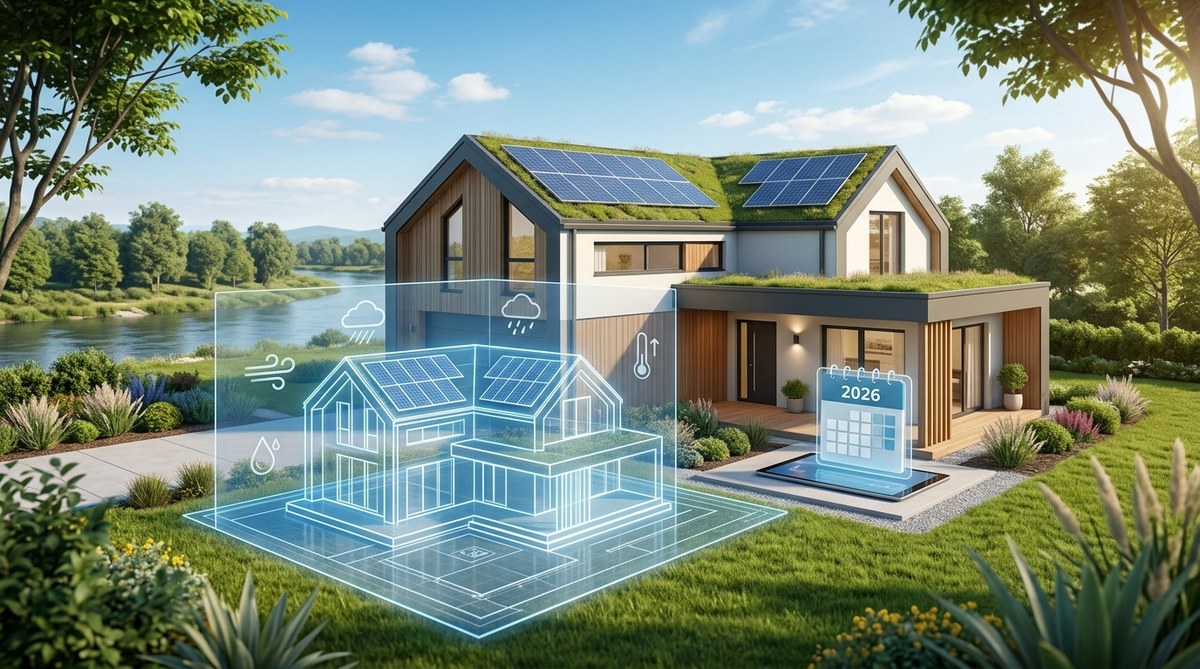
Your homeowners policy might not cover what you think it does anymore. In 2026, that letter from your insurer isn't just a bill. It's a signal that the ground beneath your home is shifting. Wildfires in California, floods in Vermont, hurricanes in Florida. Each disaster reshapes the map of insurability. Some carriers are leaving whole states. Others are doubling premiums overnight. If you live in a climate vulnerable region, you need to understand how climate change home insurance 2026 works.
Climate change is the main driver of rising home insurance costs in 2026. Premiums are up 20% or more in high risk areas, and non renewal rates are surging. Homeowners must check their policies for wildfire, flood, and wind exclusions. Investing in home hardening (like ember resistant roofs or flood barriers) can lower your rate and keep you insured. Act before your next renewal.
Why Your Home Insurance Premium Is Skyrocketing Right Now
Three years ago a typical homeowners policy in a moderate risk zone might have cost $1,200. Today that same policy runs closer to $2,000. For families in places like Paradise, California, or Fort Myers, Florida, the jumps are even steeper. Insurers are recalculating risk every 12 months. And they are using new climate models that predict more frequent billion dollar disasters.
The numbers tell a stark story. According to the National Oceanic and Atmospheric Administration, the United States experienced 28 separate weather and climate disasters in 2025 each costing over $1 billion. That broke the previous record. In response, private insurers have raised rates, tightened underwriting, and pulled coverage from entire zip codes. The result is a market where even homeowners with perfect claims histories get non renewal notices.
"The era of cheap, easy home insurance is over for many Americans. Climate change is rewriting the actuarial tables faster than anyone predicted. Homeowners must treat insurance as a dynamic cost that demands year round attention, not just a bill you pay once a year." - Dr. Lisa Patel, climate risk researcher at the University of Colorado
What Climate Change Home Insurance 2026 Looks Like on Your Policy
Your policy document is no longer standard boilerplate. Look for three key changes. First, separate sub limits for wildfire damage, often capped far below your dwelling coverage. Second, mandatory windstorm deductibles that can be 5% of your home's value. Third, explicit exclusions for flood, even if you are not in a FEMA flood zone.
This table shows common coverage gaps and how to address them:
| Coverage Gap | What It Means for You | Best Fix |
|---|---|---|
| Wildfire sub limit capped at $200k | If your house is worth $600k, you face a $400k shortfall | Buy a separate wildfire endorsement or FAIR plan wrap |
| Windstorm deductible of 5% | On a $400k home your deductible is $20k | Switch to a policy with a fixed dollar deductible or increase emergency savings |
| Flood exclusion (not in flood zone) | One inch of water in your basement costs $30k+ | Purchase a separate flood policy through NFIP or private insurer |
| Roof replacement limited to actual cash value | New roof after hail costs you thousands out of pocket | Upgrade to replacement cost coverage |
| Non renewal after one claim | Even a small claim can make you uninsurable | Avoid filing minor claims and invest in deductible buy down programs |
3 Steps to Check If Your Current Policy Will Protect You in 2026
The worst time to discover you have weak coverage is after a disaster. Take these three actions now.
-
Pull your full policy declarations page. Look for the word "excluded" or "special sub limit." Write down the dollar amounts for wildfire, wind, hail, and flood. Compare them to the cost of rebuilding your home today, not what you paid for it.
-
Call your agent and ask three specific questions: Does my policy include replacement cost for the roof? Is there a named storm deductible? Will a single claim cause non renewal? Write down the answers and get them in writing via email.
-
Request a climate risk assessment from your state insurance department. Many states now offer free tools that show your property's risk score for fire, flood, and heat over the next 10 years. Use that score to decide if you need extra coverage.
If you find gaps, don't panic. You can often buy separate policies for flood and wildfire. Some insurers now offer "climate ready" endorsements that bundle these risks. Also, look into state run FAIR plans as a backstop but only as a last resort because they cost more and cover less.
Practical Ways to Lower Your Insurance Bill While Staying Protected
Insurers are rewarding homeowners who take proactive steps. Here are proven strategies that can cut your premium by 10% to 30%:
- Install a Class A fire rated roof (concrete tile, metal, or asphalt with fire resistant underlayment)
- Clear defensible space around your home; create a 5 foot non combustible zone using gravel or pavers
- Add storm shutters or impact resistant windows in hurricane prone areas
- Elevate your electrical panel and HVAC equipment at least 12 inches above flood level
- Install a monitored water shutoff valve to prevent burst pipe claims
- Bundle home and auto with the same carrier for a multi policy discount
- Increase your deductible from $1,000 to $2,500 if you have the savings to cover it
Some of these changes qualify for state rebates or tax credits. For example, California's wildfire mitigation program offers up to $5,000 for home hardening. Check with your local utility company or state energy office.
How Communities Are Building Resilience to Keep Insurance Available
You can't control the weather, but you can influence your neighborhood's risk profile. Communities that invest in shared mitigation often see lower premiums for everyone. In 2026, more towns are adopting wildfire safety codes, building flood barriers, and creating green buffers. These actions help insurers feel confident staying in the area.
If your community hasn't done this, consider joining a local hazard mitigation committee. Federal grants through FEMA's Building Resilient Infrastructure and Communities program can fund projects like underground power lines or drainage improvements. A safer community benefits your home value and your insurance cost.
Looking Ahead: What Experts Predict for 2027 and Beyond
The trend lines are clear. Climate change will continue to increase the frequency of extreme weather. Insurance regulators are pushing for more transparency about how carriers price climate risk. Some states have already mandated that insurers disclose their catastrophe models. This could lead to more consistent pricing but also higher rates in the places most in danger.
On the technology front, new AI driven risk assessment tools are helping insurers reward homeowners who adopt climate adaptive measures. For instance, satellite imagery can verify your roof condition and defensible space without an in person inspection. That helps you get a discount faster.
There is also growing talk of a federal backstop for natural disaster insurance, similar to the National Flood Insurance Program but expanded to cover wildfire and hurricane. Nothing has passed Congress yet, but the conversation is real.
For now, your best strategy is to stay informed and act ahead of the curve. Check your policy every year at renewal time. Make one or two home improvements that lower your risk. And keep an emergency fund equal to your deductible.
Your Home, Your Policy, Your Future
The landscape of home insurance is shifting beneath our feet. But you don't have to feel helpless. By understanding what climate change home insurance 2026 means for your specific situation, you can make smart decisions that protect your biggest investment. Take that declarations page out tonight. Read it with fresh eyes. Call your agent tomorrow. And if you need a hand figuring out which home upgrades pay off fastest, we have a guide on how to prepare your home for climate change without breaking the bank that walks through budget friendly options. You deserve coverage that actually covers you when it counts.