
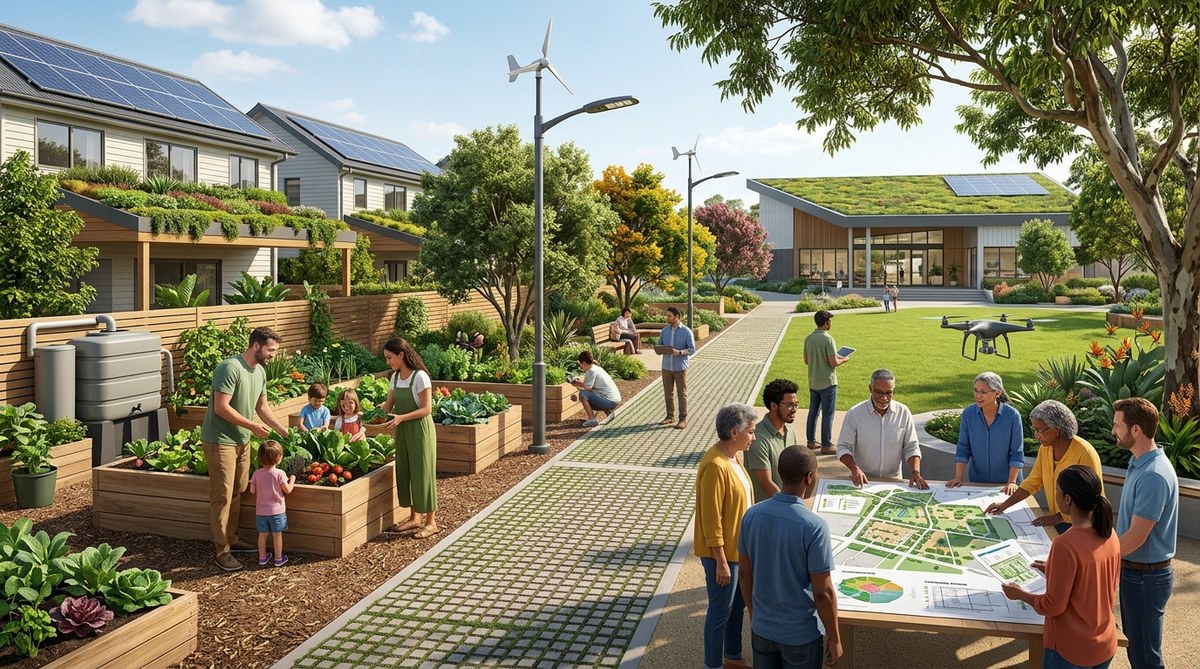
Communities across the United States are stepping up in unprecedented ways. As climate impacts intensify, local leaders, residents, and organizations are taking charge of shaping resilient, adaptive neighborhoods. These efforts are not just about responding to disasters but about creating lasting systems that withstand the tests of a changing climate. By 2026, community-led climate change adaptation has become a vital part of the national conversation. It’s a movement rooted in local action, driven by innovative ideas, and fueled by collective commitment.
Community-led climate adaptation in 2026 emphasizes local action, innovative strategies, and collective resilience. It involves practical steps like planning, engaging stakeholders, and applying tailored solutions to safeguard communities from climate risks. The success hinges on collaboration, creative problem-solving, and empowering residents to lead change at the neighborhood level.
How communities are shaping climate resilience in 2026
Local communities are no longer passive recipients of federal policies or state initiatives. Instead, they are becoming proactive architects of resilience. From small towns to sprawling urban neighborhoods, community-led adaptation involves a mix of grassroots efforts, policymaker support, and technological innovations. These initiatives focus on making neighborhoods safer, more sustainable, and better prepared for future climate challenges.
Building a foundation for community-led climate adaptation
Creating a resilient community starts with understanding local vulnerabilities. This means mapping flood zones, assessing heat island effects, and identifying at-risk populations. Once these areas are clear, communities can develop targeted strategies that address their specific needs. The process involves three key steps:
- Assess risks and vulnerabilities
- Engage residents and stakeholders
- Design and implement tailored adaptation plans
Engaging residents and stakeholders in meaningful ways
Community engagement is critical. When residents participate actively in planning, the resulting solutions are more practical and widely supported. Hosting town halls, forming neighborhood committees, and leveraging digital platforms help gather diverse perspectives. For example, neighborhood groups in flood-prone areas might collaborate with local officials to create green infrastructure projects like rain gardens or permeable pavements.
Practical steps for community-led adaptation in 2026
Implementing adaptation strategies involves a combination of planning, action, and ongoing evaluation. Here are some effective methods:
- Develop localized climate action plans that prioritize community input
- Invest in nature-based solutions such as urban green spaces and wetlands
- Use technology like early warning systems and climate data dashboards for informed decision-making
- Promote sustainable infrastructure upgrades—like solar-powered streetlights and energy-efficient buildings
- Foster partnerships across sectors to share resources and expertise
- Educate residents about climate risks and resilience practices
- Secure funding through grants, public-private partnerships, and community crowdfunding
Techniques and pitfalls in community-led adaptation
| Techniques | Mistakes to Avoid |
|---|---|
| Inclusive planning involving diverse voices | Failing to involve vulnerable populations |
| Leveraging local knowledge for tailored solutions | Relying solely on top-down policies |
| Integrating green infrastructure into urban planning | Underestimating maintenance costs of new projects |
| Using real-time climate data for quick response | Ignoring long-term climate projections |
| Building partnerships with regional organizations | Overlooking community capacity and resources |
An expert from the National Oceanic and Atmospheric Administration advises, “Community-led adaptation thrives when residents feel ownership over projects. When local voices shape solutions, efforts are more effective and sustainable.”
Successful examples of community-led climate resilience
Across the country, stories of grassroots innovation abound. In Miami, neighborhood groups have organized mangrove planting events to buffer storm surges. In Portland, residents have transformed vacant lots into rain gardens that reduce urban flooding. In Detroit, local leaders have launched urban cooling initiatives to combat heat waves, especially in underserved neighborhoods. These examples showcase how collective action can turn climate vulnerabilities into opportunities for neighborhood renewal.
Innovative tools and approaches for 2026
Technology plays a vital role in empowering communities. Climate resilience dashboards, mobile apps for reporting hazards, and social media campaigns help engage residents and streamline response efforts. Additionally, nature-based solutions like community gardens and urban forests not only improve air quality but also provide shade and cooling during heatwaves.
Techniques versus mistakes in community adaptation
| Techniques | Mistakes to Avoid |
|---|---|
| Using participatory mapping to identify local risks | Overlooking the importance of ongoing maintenance |
| Implementing pilot projects to test new ideas | Rushing solutions without community buy-in |
| Incorporating climate projections into planning | Ignoring the social and economic context |
| Training community volunteers in emergency response | Relying solely on technology without human oversight |
Expert advice on community resilience building
“Empowering residents to lead climate adaptation efforts creates a sense of ownership that no external funding or top-down plans can match,” notes a climate policy researcher. “When communities take charge, they develop innovative solutions that reflect their unique circumstances.”
The role of policymakers and researchers in supporting local efforts
While community-led adaptation is driven at the local level, support from policymakers and researchers enhances its success. Funding programs targeting neighborhood projects, sharing best practices, and conducting localized climate risk assessments strengthen these initiatives. Research provides insights into effective techniques and helps avoid common pitfalls.
Why community-led climate adaptation will define 2026
In a changing climate, no single solution fits all. Local communities are best positioned to craft context-specific strategies that address their unique vulnerabilities. Their leadership fosters social cohesion, builds local capacity, and creates models that others can replicate. By 2026, this collective approach is proving to be a cornerstone of national resilience.
Fostering resilient neighborhoods for generations to come
The future of climate adaptation depends on communities taking ownership of their resilience. Small actions, like planting a rain garden or organizing neighborhood patrols, add up to larger shifts in how we prepare for climate impacts. As residents, leaders, and policymakers collaborate, they lay the groundwork for safer, more sustainable neighborhoods that thrive despite the challenges ahead. Embracing local innovation and collective effort will ensure that communities are not just surviving but thriving in 2026 and beyond.