
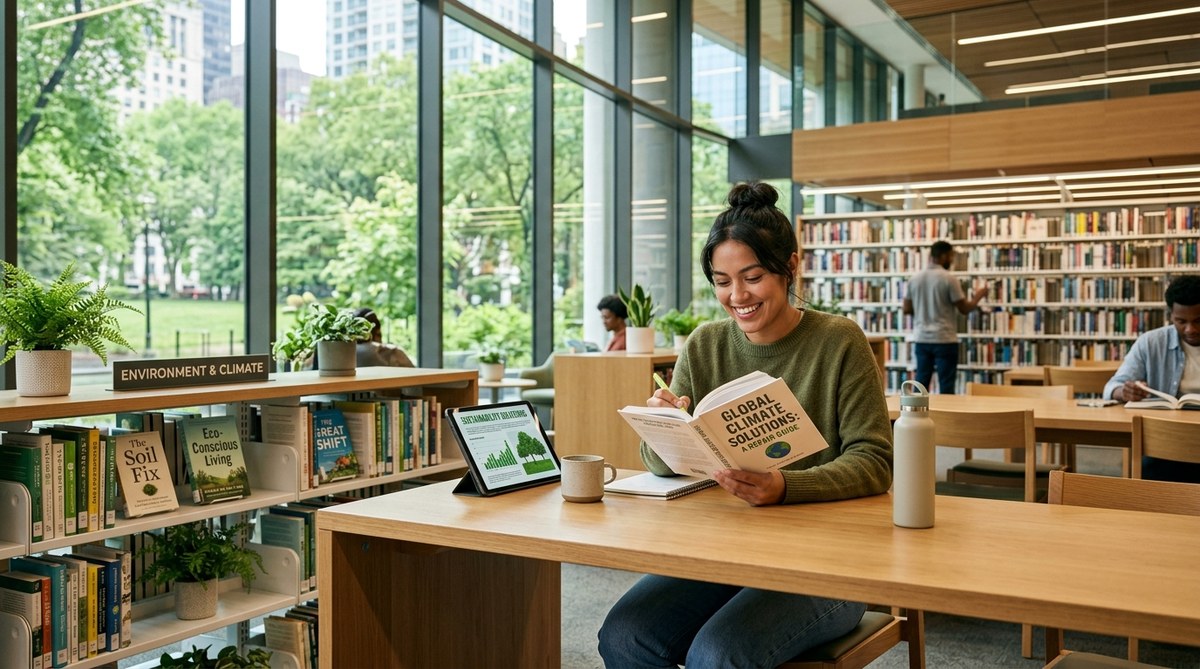
When you think about fighting climate change, images of solar panels, electric cars, or wind turbines probably come to mind. You likely don’t picture a quiet room filled with books, a librarian at the desk, and the faint smell of old paper. But that is exactly where one of the most surprising and accessible tools for climate action is waiting for you. Your local public library has quietly transformed into a hub for sustainability, and most people have no idea.
Libraries across the United States are emerging as powerful centers for climate resilience. They offer seed libraries, tool lending programs, free workshops on home energy savings, and even thermal cameras for checking insulation. These services reduce waste, lower carbon footprints, and build community connections. The best part? They are free and open to everyone.
The library as a climate resilience hub
Libraries have always been about sharing resources. That core mission now extends naturally into sustainability. In 2026, hundreds of branches across the country have expanded their collections far beyond books. You can borrow a sewing machine to mend clothes instead of buying new ones. You can check out a Kill A Watt meter to find which appliances drain the most power. Some libraries even lend out handheld thermal cameras so you can find drafty windows and gaps in your home insulation.
This shift turns the library into a practical tool for reducing household emissions. It also saves you money. Instead of buying an expensive tool you will use once, you borrow it for free. Instead of tossing a torn jacket, you borrow a sewing machine and fix it. These small actions add up.
What you can borrow at a modern library
- Thermal cameras for home energy audits
- Sewing machines and mending kits
- Seed packets for native plants and vegetables
- Tool kits for bike repair
- Weatherization kits with caulk and weather stripping
- Radon test kits
- Compost bins and worm bins
Seed libraries: a quiet revolution in local food
One of the most unexpected climate solutions hiding in your library is the seed library. These are small cabinets or drawers filled with packets of vegetable, herb, and flower seeds. You take what you need, plant them, and ideally return seeds from your harvest at the end of the season. It is a low cost way to grow your own food, reduce transportation emissions, and support local biodiversity.
Seed libraries also preserve heirloom varieties that are adapted to your local climate. These plants often need less water and fewer chemicals than store bought hybrids. For communities facing hotter summers and unpredictable rainfall, that resilience matters.
“A seed library is more than free seeds. It is a community investment in food security and climate adaptation. When people grow their own tomatoes and peppers, they cut out thousands of miles of food transport. That is a direct carbon reduction.” — Sarah Chen, urban agriculture coordinator at the American Library Association
How libraries teach energy savings without selling anything
Libraries are trusted institutions. They are not trying to sell you solar panels or a smart thermostat. That neutrality makes them ideal places for learning about energy efficiency. Many branches now host workshops on reducing home energy use. These sessions cover simple changes like switching to LED bulbs, sealing ducts, and programming thermostats. Some libraries even partner with local utilities to give away free LED bulbs and power strips.
The table below shows how library led energy programs compare with typical DIY approaches.
| Action | Library supported approach | Typical DIY approach | Carbon impact |
|---|---|---|---|
| Home energy audit | Borrow a thermal camera and get a checklist | Hire a professional auditor | Moderate (audit cost savings) |
| Appliance efficiency | Borrow a Kill A Watt meter | Guess which appliance uses most power | High (targeted replacement) |
| Weatherization | Attend a workshop, get free caulk | Buy materials without guidance | High (proper sealing matters) |
| Lighting upgrade | Free LED bulbs at workshops | Buy bulbs at retail price | Moderate (cost savings) |
The hidden climate cost of stuff and how libraries fight it
Every object you own has a carbon footprint. The manufacturing, packaging, and shipping all release greenhouse gases. When you buy a power drill you will use for ten minutes, that carbon cost is wasted. Libraries fight this by creating a sharing economy that is free and local.
Think about the last time you needed a specific tool. Maybe a pipe wrench, a carpet cleaner, or a pressure cooker. Instead of buying one and letting it sit in a closet for years, you can borrow it from your library. This reduces demand for new products and keeps usable items out of landfills.
Three steps to start using your library as a climate tool
- Visit your library’s website or front desk and ask about their “library of things” collection. Many systems have an online catalog for non book items.
- Sign up for a library card if you do not already have one. Most programs are free and only require proof of residence.
- Attend one workshop per season. Topics shift with the calendar: winter focuses on home heating, spring on gardening, summer on energy savings, and fall on weatherization.
Why 2026 is the year to rediscover your library
Public libraries are facing budget pressures, but their role as community anchors is stronger than ever. In 2026, many libraries have leaned into sustainability because it aligns with their mission and draws new visitors. People who never read books are coming in for seed swaps and tool rentals. That foot traffic helps libraries demonstrate their value to local governments.
Libraries also serve as cooling centers during heat waves and warming centers during winter storms. They provide internet access for people who need to apply for energy assistance programs. They host repair cafes where volunteers fix small appliances and electronics. All of these services reduce emissions and build resilience.
For more on how communities are leading climate adaptation, see our guide on how communities can lead the way in climate change adaptation by 2026.
Common mistakes people make when using library sustainability programs
People sometimes assume these services are low quality or too limited to matter. That is not true. Library seed packets come from reputable growers. Thermal cameras are professional grade. The workshops are often taught by local experts who volunteer their time.
Another mistake is thinking you have to give something back. While seed libraries appreciate returned seeds, there is no penalty for taking seeds and not returning them. The goal is to get more people growing food, not to enforce strict rules.
Finally, some people do not realize that interlibrary loan systems can bring in specialized items. If your small town library does not have a thermal camera, they might be able to borrow one from a larger branch in the same system. Always ask.
The bigger picture: libraries as carbon reduction multipliers
Libraries do not just help individuals. They multiply climate action across the community. When one person borrows a thermal camera and finds poor insulation, they tell their neighbors. Soon a whole street is sealing drafts and lowering energy bills. When a library hosts a seed swap, it creates a network of home gardeners who share tips and surplus produce.
This multiplier effect is something that top down climate policies struggle to achieve. It is organic, social, and driven by trust. Libraries provide the infrastructure for that trust.
For more on how small scale changes add up, check out innovative strategies to reduce carbon footprints in urban areas.
What to look for when you visit
Not every library offers the same programs. Here is what to ask about on your next visit:
- Do you have a seed library or seed swap?
- Do you lend tools like sewing machines, thermal cameras, or Kill A Watt meters?
- Do you host repair cafes or fix it clinics?
- Do you offer workshops on home energy savings or gardening?
- Do you have a partnership with the local utility for free efficiency kits?
If your library does not offer these yet, ask if they have considered it. Librarians pay attention to patron requests. A polite suggestion can start a new program.
Turning borrowed knowledge into lasting change
The beauty of library based climate solutions is that they remove barriers. You do not need money. You do not need expertise. You just need a library card and curiosity. That makes this one of the most equitable climate strategies available in the United States today.
Start small. Borrow a book on native gardening. Pick up a packet of bean seeds. Check out a meter and see how much power your old refrigerator uses. Each action teaches you something and reduces your footprint.
For ideas on making your home more efficient without spending much, read our piece on how to prepare your home for climate change without breaking the bank.
Your library is waiting
The next time you walk past your local library, stop in. Look past the bookshelves and computer terminals. Ask about the unexpected climate solutions hiding in plain sight. You might leave with a tomato seedling, a new skill, or the knowledge that your home is wasting less energy. In 2026, that kind of progress matters more than ever.
Libraries are not just quiet places for reading. They are active partners in building a cooler, more resilient future. And they are open to everyone, no matter your budget or background. That is a climate solution worth celebrating.