
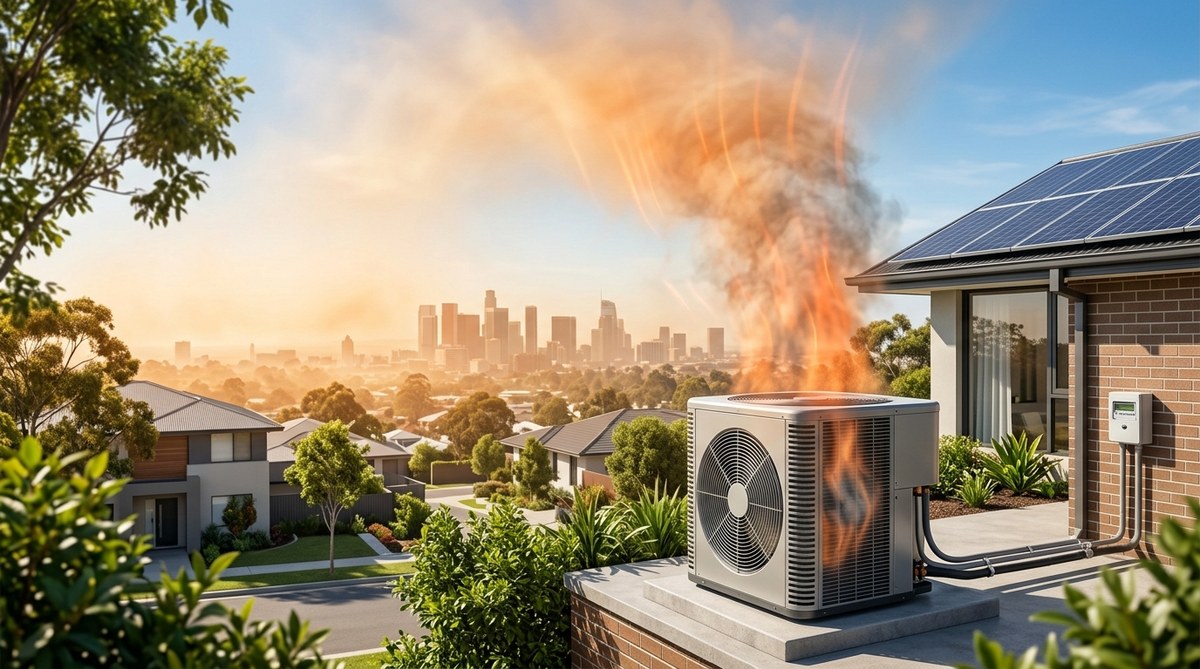
Air conditioning is a lifesaver during a scorching July heatwave. It keeps your home comfortable, helps you sleep, and protects vulnerable family members from heat-related illness. But here is the uncomfortable truth: every time you crank up the AC, you are also contributing to the very problem that makes you need it in the first place. The machines we rely on to beat the heat are quietly making the planet hotter.
Air conditioning creates a dangerous feedback loop. It uses massive amounts of electricity, often from fossil fuels, and leaks potent greenhouse gases called refrigerants. Together, these factors make the environmental impact of air conditioning a serious concern. But you can break the cycle with smarter choices, better technology, and simple home upgrades.
The Two Sides of the Cooling Problem
Understanding the environmental impact of air conditioning starts with recognizing that AC units harm the climate in two distinct ways. First, they consume a lot of energy. Second, they rely on refrigerants that are incredibly potent greenhouse gases.
Energy Consumption and the Power Grid
A central air conditioner in a typical American home uses around 3,500 kilowatt-hours per year. That is roughly the same amount of electricity needed to power an entire electric vehicle for 12,000 miles. When you add up all the AC units running in the United States, they account for about 6% of the country’s total electricity use.
Most of that electricity still comes from natural gas and coal plants. Every kilowatt-hour generated from fossil fuels releases carbon dioxide into the atmosphere. So when you run your AC, you are indirectly pumping CO2 into the air. This is the most direct link in the chain between personal cooling and global warming.
The Refrigerant Problem
The second issue is harder to see. Air conditioners use chemical refrigerants to transfer heat. Older units commonly used R-22, a hydrochlorofluorocarbon that damages the ozone layer. Newer units use hydrofluorocarbons (HFCs) like R-410A, which do not harm the ozone but are still powerful greenhouse gases.
Here is the shocking part. One pound of R-410A has the same global warming potential as about 2,088 pounds of carbon dioxide. If your AC unit develops a slow leak, that refrigerant escapes into the atmosphere and traps heat thousands of times more effectively than CO2. A single leaking window unit can undo months of other climate-friendly habits.
A Dangerous Feedback Loop
This is where the paradox gets uncomfortable. Rising global temperatures mean more people buy and use air conditioning. More AC use means more greenhouse gas emissions. More emissions mean even higher global temperatures. The cycle feeds itself.
Scientists call this the “cooling trap.” As summers get hotter, demand for AC spikes. In 2026, many US cities are experiencing longer heatwaves than they did just a decade ago. Phoenix, Arizona, now sees over 100 days above 100 degrees Fahrenheit each year. For residents there, air conditioning is not a luxury. It is a necessity. But the very act of staying cool is making the outdoor heat worse.
The Global Scale
The problem is not just in the United States. Countries like India, Indonesia, and Brazil are rapidly installing air conditioners as their middle classes grow. The International Energy Agency projects that the global stock of AC units will triple by 2050. If every new unit uses today’s technology and refrigerants, the environmental impact of air conditioning could push global warming past critical tipping points.
What You Can Do About It
You do not have to give up cooling entirely. That is not realistic, and it is not what we are suggesting. Instead, you can make smarter choices that reduce the environmental impact of air conditioning while keeping your home comfortable.
Three Practical Steps to Cool More Sustainably
-
Upgrade to a high-efficiency unit. Look for a SEER2 rating of 16 or higher. Modern inverter-driven compressors use much less electricity than older models. They also maintain a more consistent temperature, so you feel comfortable without constant cycling.
-
Seal and insulate your home. A leaky house wastes cool air. Check for gaps around windows and doors. Add attic insulation if yours is old or thin. This reduces the load on your AC and lowers your energy bill.
-
Service your AC annually. A technician can check for refrigerant leaks, clean the coils, and replace the air filter. A well-maintained unit runs more efficiently and is less likely to leak potent greenhouse gases.
Comparing Common Cooling Mistakes
| Mistake | Why It Hurts | Better Approach |
|---|---|---|
| Setting the thermostat to 68 degrees | Forces the compressor to run nonstop, wasting energy | Keep it at 76 degrees when home and 80 degrees when away |
| Ignoring dirty air filters | Reduces airflow, making the unit work harder | Clean or replace filters every 30 to 60 days |
| Using a window unit in a poorly shaded room | The sun heats the room faster, increasing run time | Close blinds and curtains during peak sun hours |
| Buying the cheapest unit available | Lower efficiency and higher refrigerant leak risk | Invest in a unit with a higher SEER2 rating |
Sustainable Cooling Alternatives
- Ceiling fans and portable fans. Moving air makes you feel cooler by about 4 degrees Fahrenheit. You can raise your thermostat setting without sacrificing comfort.
- Heat pumps. Modern heat pumps provide both heating and cooling with remarkable efficiency. They use electricity to move heat rather than generate it, cutting energy use by half compared to traditional AC.
- Passive cooling design. If you own your home, consider adding reflective roofing materials, planting shade trees on the south and west sides, and installing attic ventilation fans. These strategies reduce the need for mechanical cooling.
“The most efficient air conditioner is the one you never have to turn on. Focus on keeping heat out of your home first, and you will shrink your carbon footprint without sacrificing comfort.” — Dr. Maria Zubizarreta, building science researcher at Lawrence Berkeley National Laboratory
How Refrigerant Regulations Are Changing
The good news is that policy is catching up. The American Innovation and Manufacturing Act of 2020 set a schedule to phase down HFCs by 85% by 2036. In 2026, new regulations are pushing manufacturers toward refrigerants with much lower global warming potential, such as R-32 and R-454B.
When you buy a new AC unit, check the label for the refrigerant type. Units using R-32 have about one-third the global warming potential of older R-410A models. This is one of the easiest ways to reduce the environmental impact of air conditioning when you need to replace an old system.
The Bigger Picture
The environmental impact of air conditioning is not just about individual choices. It is also about the systems we build as a society. Cities that invest in green infrastructure, like cool roofs and tree canopy, can lower urban temperatures by several degrees. This reduces the demand for AC across entire neighborhoods.
If you are interested in how communities are tackling this challenge, check out how communities can lead the way in climate change adaptation by 2026. And for homeowners looking for budget-friendly upgrades, our guide on how to prepare your home for climate change without breaking the bank offers practical tips that complement better cooling habits.
What a Cooler Future Looks Like
We do not have to choose between comfort and the climate. By using more efficient technology, maintaining our equipment, and designing smarter homes and cities, we can break the feedback loop. The goal is not to sweat through summer. The goal is to stay cool without heating up the planet.
Think of it this way. Every degree you raise your thermostat, every filter you clean, and every leak you fix is a small step toward a more stable climate. These actions add up. And when millions of people make the same shift, the collective impact is enormous.
So next time the summer sun beats down, remember that you have more power than you think. You can be cool and climate conscious at the same time. It just takes a little knowledge and a few intentional choices.