
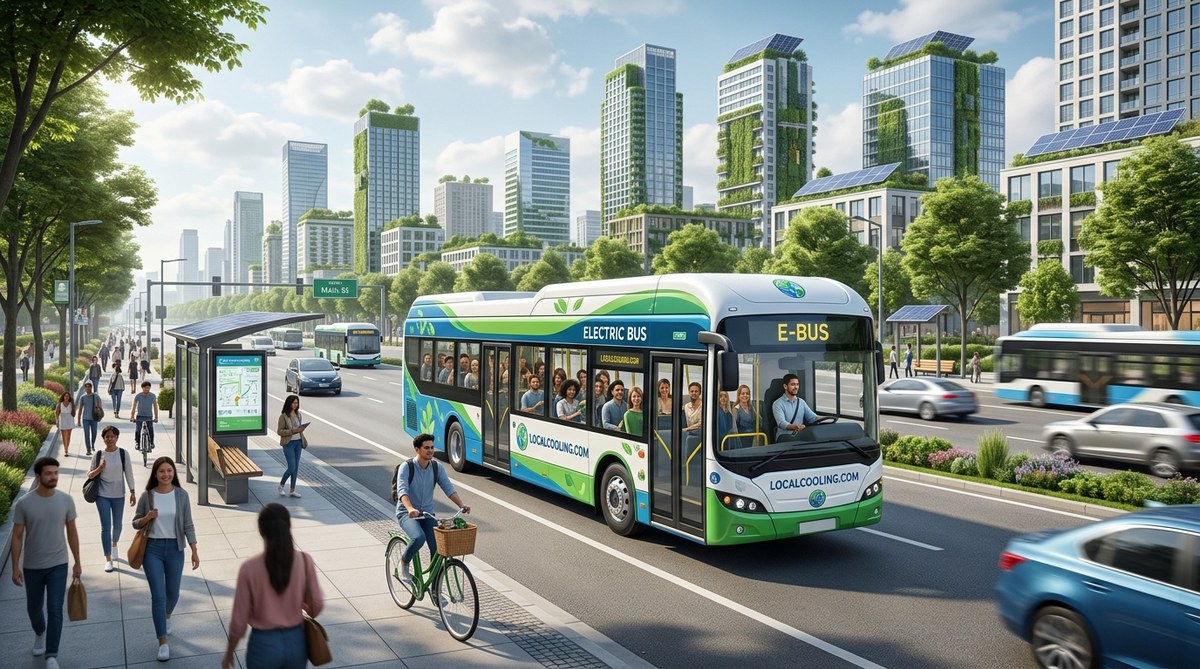
Most of us see a city bus and think about crowded seats, slow routes, or the occasional missed stop. But there is another side to that big diesel or electric vehicle rolling down your street. It is one of the most effective climate solutions we already have. Every bus that replaces just a handful of cars on the road cuts carbon emissions in a way that feels almost too simple. And in 2026, as cities across the United States push for deeper emission reductions, public transit has become a quiet powerhouse in the fight against climate change.
Public transit systems, especially city buses, deliver massive environmental benefits by reducing per passenger emissions, lowering traffic congestion, and shrinking urban heat islands. A single bus can replace up to 40 cars on the road. When you combine bus networks with renewable energy and smart urban planning, they become a cornerstone of any city’s climate action plan.
Why the Bus Beats the Car Every Time
Let us look at the numbers. A standard city bus carrying a full load of passengers produces far less carbon dioxide per mile per person than a single occupancy car. The U.S. Department of Transportation estimates that commuting by public transit can reduce an individual’s carbon footprint by an average of 4,800 pounds of CO2 per year. That is roughly the same as planting 100 trees and letting them grow for a decade.
The math works because of efficiency. A bus with 30 passengers uses about the same amount of fuel as two or three cars. But those 30 people would normally need 25 to 30 separate vehicles. You are essentially compressing the energy demand of a small neighborhood into one vehicle. That is not just smart. It is essential for meeting the climate goals that cities have set for 2026 and beyond.
The Hidden Climate Benefits You Do Not See
When people talk about the environmental benefits of public transit, they usually stop at tailpipe emissions. But the real story goes deeper.
Less Traffic Means Less Idling
Traffic jams are not just frustrating. They are terrible for the planet. Cars stuck in gridlock burn fuel and produce emissions without moving anyone anywhere. Every bus that removes 30 cars from the road reduces congestion. Less idling means less wasted fuel. The American Public Transportation Association has found that every dollar invested in public transit generates about four dollars in economic returns, partly because of reduced congestion and fuel waste.
Smaller Parking Footprints
Parking lots are a climate problem hiding in plain sight. They are paved surfaces that absorb heat, contribute to urban heat islands, and prevent rainwater from soaking into the ground. When a city invests in buses, it can reduce the amount of land needed for parking. That land can then be used for parks, community gardens, or permeable surfaces that help manage stormwater. It is a shift that directly supports innovative strategies to reduce carbon footprints in urban areas.
Cleaner Air for Everyone
Buses, especially newer electric models, produce fewer particulate emissions than a fleet of cars. Fine particulate matter from vehicle exhaust is linked to asthma, heart disease, and premature death. By concentrating passenger miles into fewer vehicles, cities can dramatically improve local air quality. This is a benefit that does not show up in a carbon budget but matters deeply for public health.
How to Make Your Bus System a Climate Hero
Not all bus systems are created equal. Some cities have invested heavily in electric fleets, dedicated bus lanes, and smart scheduling. Others still run old diesel buses on winding routes that nobody uses. If you want to push your local transit system toward its full climate potential, here is a practical list of actions you can take.
- Ride the bus yourself. The single most effective thing you can do is to become a regular rider. Every passenger adds to the ridership numbers that cities use to justify funding for better service.
- Advocate for electric buses. Write to your city council or transit authority. Ask them to commit to an all electric fleet by 2030. Many cities have already started this transition, and your voice can help speed it up.
- Support dedicated bus lanes. Buses stuck in car traffic defeat the purpose. Dedicated lanes let buses move faster, which attracts more riders and reduces the time engines spend idling.
- Use transit apps to plan trips. The easier it is to ride, the more likely people will do it. Share your positive experiences with friends and neighbors.
- Vote for transit friendly policies. Local ballot measures often include funding for public transit. Show up and vote yes.
Common Mistakes Cities Make with Public Transit
Even well intentioned cities can stumble when trying to make their bus systems more environmentally friendly. Here is a table that breaks down common mistakes and the better approach.
| Mistake | Why It Hurts Climate Goals | Better Approach |
|---|---|---|
| Running old diesel buses on low ridership routes | High emissions per passenger, wasted fuel | Use smaller shuttles or on demand electric vans |
| Cutting weekend service to save money | Forces riders to use cars on days off | Maintain consistent service to build ridership habits |
| Ignoring bus stop infrastructure | Uncomfortable waits discourage riders | Add shelters, benches, and real time arrival boards |
| Focusing only on downtown routes | Misses suburban commuters who drive the most | Create park and ride lots with direct bus connections |
| Not coordinating with bike share programs | Misses an opportunity for first mile/last mile solutions | Integrate bike racks on buses and bike lanes near stops |
Getting these details right can transform a struggling bus line into a popular, low carbon option.
The Role of Renewable Energy in Transit
A bus that runs on electricity is only as clean as the grid that powers it. That is why the push for electric buses must go hand in hand with the transition to renewable energy. Many transit agencies are already installing solar panels on depot roofs or signing power purchase agreements for wind energy. When you charge an electric bus with solar power, you are essentially running a zero emission vehicle.
This is where the bigger picture comes into view. The future of renewable energy and its impact on climate resilience is directly tied to how we power our daily lives, including how we move around. A bus system that runs on clean energy is not just a climate solution. It is a statement that a city is ready for the future.
What the Experts Say
“The single most cost effective way to reduce transportation emissions in a city is to get people onto buses. It is not flashy. It is not high tech. But it works. Every time a city adds a bus route and people use it, we see a measurable drop in per capita emissions. We need more of that.”
Dr. Elena Marquez, urban climate policy researcher at the University of California
That quote captures the heart of the argument. Buses are not a glamorous solution. They are a practical, scalable, and proven one.
Why Your City Bus System Deserves More Attention
We tend to celebrate shiny new technologies like electric cars or solar roofs. Those are important. But they often serve people who already have resources. Public transit is different. It serves everyone, regardless of income. And when a city builds a great bus system, it reduces emissions for the whole community, not just for the people who can afford a new EV.
There is also a social equity angle that matters for climate action. Low income neighborhoods and communities of color often bear the brunt of air pollution from traffic. A clean, efficient bus system can reduce that pollution while providing affordable mobility. That is a double win.
For a deeper look at how cities are rethinking their approach, check out innovative strategies for achieving urban sustainability in the 21st century. The connection between transit, land use, and renewable energy is where the real magic happens.
Putting It All Into Action
If you are reading this and thinking about your own commute, start small. Try taking the bus one day a week. See how it feels. Track your carbon savings using an online calculator. Then talk to your coworkers, your neighbors, and your local representatives. The more people who see the bus as a climate hero, the more cities will invest in making it better.
Buses are not a perfect solution. They still require infrastructure, fuel, and maintenance. But compared to the alternative of millions of single occupancy cars, they are a massive step in the right direction. And in a year like 2026, when every ton of carbon matters, we cannot afford to overlook them.
Your Next Ride Could Be the Most Climate Friendly One Yet
The next time you see a bus go by, think about what it represents. It is not just a vehicle. It is a system that can move dozens of people while using a fraction of the energy of cars. It is a tool for cleaner air, less traffic, and a smaller carbon footprint. And it is already there, running on your street, waiting for you to hop on.
So give it a try. Your city bus might just be the quiet climate hero you have been looking for.