
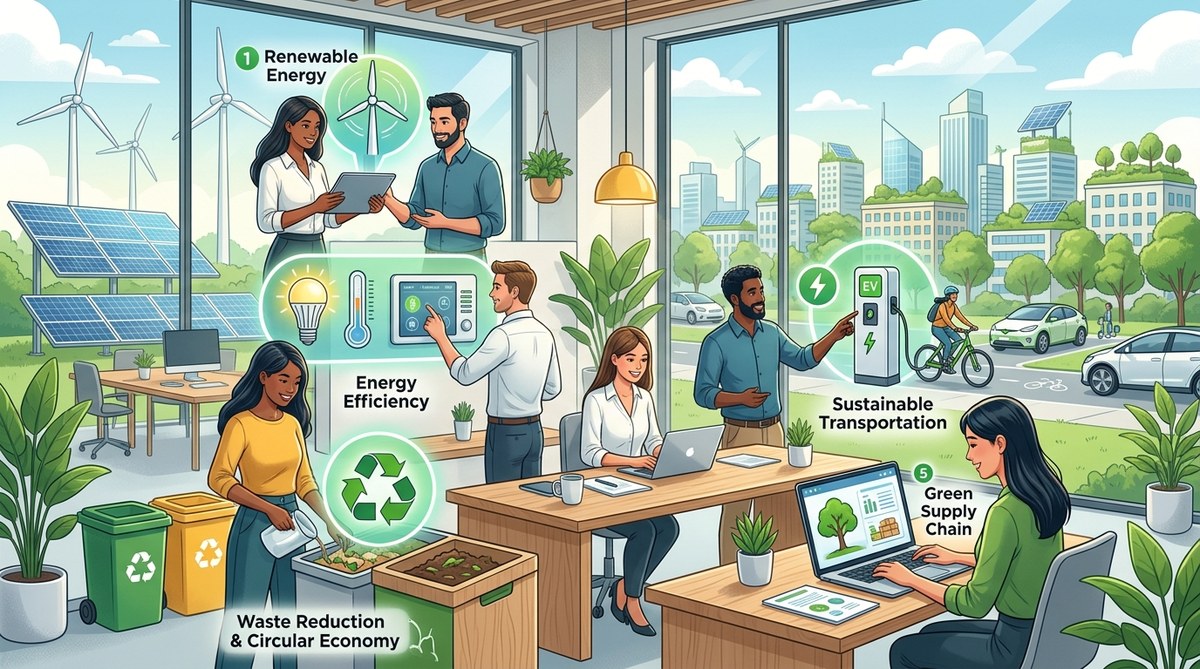
Taking active steps toward reducing your company’s carbon footprint benefits the environment and can also improve your brand reputation and operational efficiency. As more consumers and partners prioritize sustainability, implementing meaningful practices has become essential. Luckily, there are straightforward ways to make your business greener without overhauling everything at once. Let’s explore some practical sustainable practices to reduce carbon emissions that you can start today.
Adopting a combination of energy efficiency, sustainable sourcing, and waste reduction strategies can significantly lower your company’s carbon emissions. These practical steps not only help the planet but also boost your reputation and operational savings. Starting with a clear plan and tracking progress makes sustainability achievable and rewarding for your business and community.
Embrace energy efficiency in daily operations
Energy consumption is usually the largest contributor to a company’s carbon footprint. Making your operations more energy-efficient is one of the quickest ways to lower emissions.
1. Conduct an energy audit and set goals
Begin with a thorough review of how energy is used across your facilities. Identify areas where energy is wasted or used inefficiently. This can include outdated lighting, HVAC systems, or equipment that consumes more power than necessary. After auditing, set clear, achievable goals for reducing energy use.
2. Upgrade to energy-saving technologies
Switch to LED lighting, install programmable thermostats, and replace old machinery with energy-efficient models. Consider investing in smart systems that optimize heating, cooling, and lighting based on occupancy. Often, these upgrades pay for themselves through lower utility bills.
3. Shift to renewable energy sources
Where possible, power your operations with renewable energy like solar, wind, or hydro. Many businesses now enter into power purchase agreements or install solar panels on-site. If direct installation isn’t feasible, look for green energy options through your utility provider.
“Switching to renewable energy not only cuts emissions but also provides price stability over time,” advises sustainability expert Laura Green.
Optimize supply chain and sourcing practices
Your supply chain accounts for a significant share of your overall emissions. Making smarter choices here can create a ripple effect of sustainability.
4. Audit and improve your supply chain
Work with suppliers who prioritize sustainability. Request transparency about their environmental practices and choose partners with low-carbon processes. Consider local sourcing to reduce transportation emissions.
5. Prioritize sustainable materials and packaging
Select recycled, biodegradable, or sustainably sourced materials whenever possible. Reducing packaging waste, especially single-use plastics, cuts down emissions related to production and disposal.
6. Reduce transportation emissions
Encourage bulk shipping, consolidate deliveries, and switch to electric or fuel-efficient vehicles for logistics. If feasible, incentivize employees to bike or use public transit for commuting.
| Technique | Mistake to Avoid |
|---|---|
| Using suppliers without sustainability standards | Choosing cheapest options regardless of impact |
| Overlooking transportation emissions | Relying solely on air freight for urgent deliveries |
Minimize waste and promote circular practices
Waste management is a vital component of sustainability. Reducing, reusing, and recycling can significantly cut your carbon footprint.
7. Implement waste reduction programs
Set up composting and recycling stations. Educate employees on waste minimization and encourage responsible consumption. Track waste reduction progress to stay motivated.
8. Adopt circular economy principles
Design products and processes that reuse materials or extend product life cycles. For example, refurbish old equipment or create products from recycled inputs.
9. Reduce paper use and digitize processes
Transition to digital documentation, invoicing, and communication to lower paper waste. This small change has a cumulative positive impact on emissions.
Invest in employee engagement and community initiatives
Your team can be a powerful driver of sustainability when motivated and educated.
10. Foster a culture of sustainability
Provide training and incentives for employees to adopt eco-friendly practices. Recognize efforts and share success stories.
11. Support local environmental projects
Partner with community organizations, participate in cleanup events, or sponsor tree planting initiatives. These actions enhance your company’s environmental reputation and create local impact.
| Technique | Common Mistake |
|---|---|
| Not involving staff in sustainability goals | Treating sustainability as solely management’s responsibility |
| Neglecting ongoing training | Implementing one-time initiatives without follow-up |
Tracking and improving your sustainability efforts
Continuous measurement is key to maintaining progress. Use tools like carbon accounting software to track emissions and identify new opportunities.
Set specific KPIs such as reduction in energy use, waste diversion rates, or percentage of sustainable sourcing. Regular reviews help you stay aligned with your goals and adjust strategies as needed.
“Without consistent tracking, sustainability efforts can become unfocused. Data-driven decisions lead to better outcomes,” emphasizes environmental strategist Mark Evans.
Common pitfalls to avoid:
| Mistake | Fix |
|---|---|
| Focusing only on emissions reduction | Integrate sustainability into all business aspects |
| Ignoring employee feedback | Engage staff regularly for ideas and improvements |
Making sustainability part of your company’s DNA
Adopting sustainable practices to reduce carbon emissions is a journey, not a one-time project. Start small, celebrate wins, and scale gradually. Remember that every effort counts.
Implementing these strategies can transform your business into a greener, more responsible enterprise. The key is to stay committed, stay informed, and involve your entire team.
Creating a greener future together
By integrating these practical, sustainable practices into your daily operations, your company can cut emissions effectively while enhancing its reputation. Take the first step today—your planet and your bottom line will thank you.