
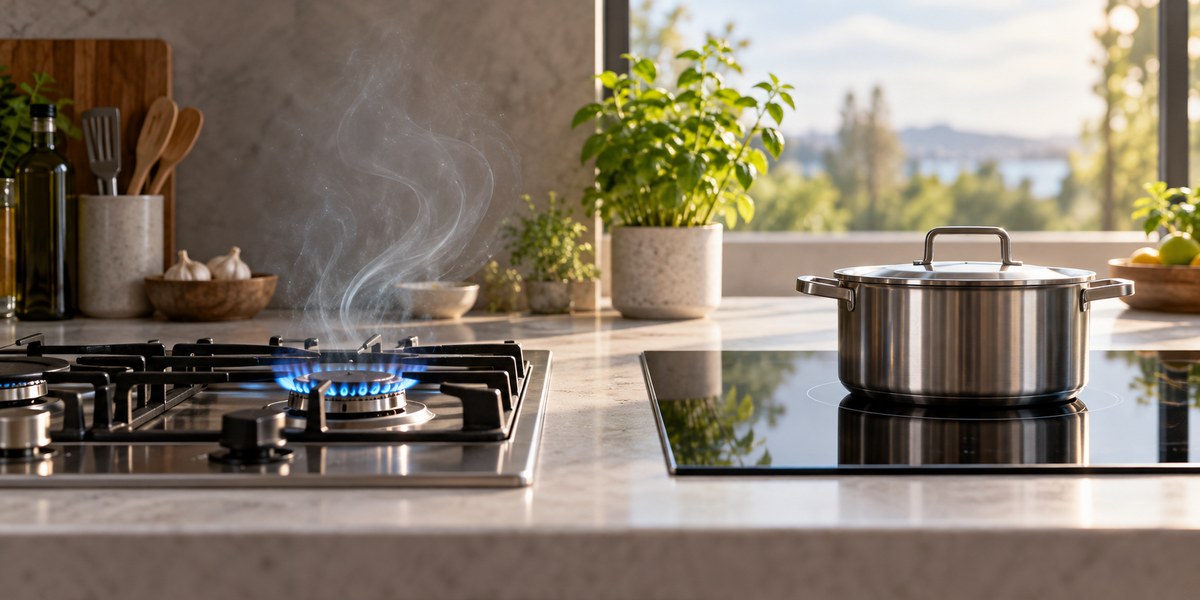
Your gas stove is a workhorse. It boils water faster than an electric kettle, sears a steak with a satisfying crust, and gives your kitchen a professional feel. But that blue flame comes with a hidden cost. When you burn natural gas in your home, you are directly releasing carbon dioxide (CO2) and methane into the atmosphere. Methane is a potent greenhouse gas, and even small leaks from your stove can add up. In fact, a 2022 Stanford study found that gas stoves across the United States leak as much methane as the CO2 emissions from half a million cars. That statistic is hard to ignore. If you care about your household’s carbon footprint, your stove is a great place to start making changes.
Gas stoves contribute to climate change through both CO2 emissions from burning fuel and methane leaks from pipelines and the appliance itself. The climate impact is significant, but you can reduce it by switching to induction, using ventilation, or offsetting your usage. Small changes in your kitchen can lead to meaningful reductions in your personal carbon footprint.
The Surprising Scale of the Problem
Most people think of cars, power plants, or airplanes when they consider their climate impact. Your kitchen stove probably does not make the list. But natural gas is mostly methane. When it burns, it creates CO2. When it leaks before burning, it releases pure methane. Methane traps about 80 times more heat than CO2 over a 20 year period. That makes even small leaks a big deal.
A study from Stanford University published in 2022 measured gas stove emissions in 53 homes. The researchers found that more than three quarters of the methane released happened while the stove was off. Those tiny leaks from fittings, valves, and connections add up. Nationwide, the methane leaking from gas stoves has the same climate impact as the CO2 emissions from roughly 500,000 gasoline powered cars. That is a lot of hidden pollution coming from inside our homes.
How Gas Stoves Affect Your Health and the Planet
The climate impact is not the only concern. Burning natural gas indoors also produces nitrogen dioxide (NO2). This pollutant is linked to respiratory problems, especially in children. A 2013 study from the Journal of Epidemiology and Community Health found that children living in homes with gas stoves had a 42 percent higher risk of asthma symptoms. So when you think about the gas stove climate impact, remember that it affects both the planet and the air you breathe.
What Makes Gas Stoves a Climate Problem?
- Direct methane leaks: Even when turned off, gas stoves slowly leak methane into your home.
- CO2 emissions: Every hour of cooking releases about 0.1 pounds of CO2, depending on the burner.
- Upstream leaks: Natural gas leaks from pipelines and storage facilities before it ever reaches your stove.
- Inefficiency: Gas stoves convert only about 40 percent of the energy in gas into heat for your food. The rest goes into the room or is wasted.
Comparing Your Options: Gas vs. Electric vs. Induction
If you are thinking about making a change, it helps to see the full picture. The table below breaks down the climate impact, efficiency, and other factors for each stove type.
| Stove Type | Climate Impact | Energy Efficiency | Indoor Air Quality | Typical Cost |
|---|---|---|---|---|
| Gas | High (methane + CO2) | 40% | Poor (NO2, benzene) | $800 to $2,500 |
| Standard Electric | Medium (depends on grid) | 75% | Good | $600 to $2,000 |
| Induction | Low (electric only) | 85% | Excellent | $1,200 to $3,500 |
Induction stoves are the clear winner for climate and health. They use magnetic fields to heat the pan directly. No open flame, no gas leak, no combustion byproducts. They are also faster and more precise than gas.
Steps You Can Take to Reduce Your Gas Stove Climate Impact
You do not need to rip out your kitchen tomorrow. Here is a practical plan to start reducing your footprint today.
- Get a carbon monoxide alarm. This is a safety first step. If you have a gas stove, you should already have one. It will alert you to dangerous combustion byproducts.
- Use your range hood every time you cook. Many people skip this step. But venting the air outside removes pollutants and reduces the amount of methane that stays in your home. Make sure your hood vents to the outside, not just through a filter.
- Switch to electric or induction for small tasks. Use an electric kettle for boiling water. Use a toaster oven or microwave for reheating. These small changes reduce the time your gas burners are on.
- Offset your stove’s emissions. You can buy verified carbon offsets to balance out the CO2 and methane from your cooking. This is not a long term fix, but it helps while you plan a bigger upgrade.
- Plan for an induction upgrade. When your gas stove needs replacing, choose induction. Many utilities and state governments offer rebates. In 2026, the Inflation Reduction Act still provides tax credits for electric appliances.
“The single most impactful thing a homeowner can do for their indoor air quality and climate footprint is to replace their gas stove with an induction model. It is a cleaner, safer, and more efficient choice.” – Dr. Emily Williams, Environmental Health Researcher at Stanford University
Common Mistakes People Make When Trying to Reduce Impact
It is easy to fall into traps that seem helpful but do not actually reduce your gas stove climate impact. Here are a few to watch for.
- Relying only on an air purifier. An air purifier can help with particles, but it does nothing to stop methane or CO2 emissions. You need source control.
- Using the stove “less” but not changing habits. Cooking one less meal per week helps a little, but the real gains come from eliminating leaks and combustion.
- Buying a “high efficiency” gas stove. There is no such thing as a truly clean gas stove. Any gas appliance will leak methane and produce CO2.
- Assuming your utility’s “renewable natural gas” is clean. Most renewable natural gas is still mostly methane. It is not a climate solution.
How to Make the Switch to Induction
If you are ready to move away from gas, induction is the best option. Here is how to approach the transition.
Check Your Electrical Panel
Induction stoves need a 240 volt outlet. Most modern kitchens have this, but older homes may need an electrician to run a new circuit. This can cost between $300 and $800.
Choose the Right Cookware
Induction works with magnetic pans. Test your current pots and pans with a magnet. If the magnet sticks, they will work. Cast iron, enameled cast iron, and most stainless steel are fine. Aluminum and copper will not work unless they have a magnetic bottom.
Look for Rebates
Many states and local utilities offer rebates for induction stove purchases. In 2026, you can stack federal tax credits with state level incentives. Some programs offer up to $840 off the purchase price.
Sell or Donate Your Gas Stove
If your gas stove is still in good shape, list it on a used appliance marketplace. Someone else will use it, but at least it stays out of a landfill. You can also donate to a local Habitat for Humanity ReStore.
The Bigger Picture: Why Your Kitchen Matters for Climate Action
Switching away from gas is one of the most effective personal climate actions you can take. It reduces direct emissions from your home, improves your indoor air quality, and lowers your utility bills over time. It also sends a signal to manufacturers and utilities that people want clean appliances.
For a deeper look at how urban areas are tackling similar problems, read about innovative strategies to reduce carbon footprints in urban areas. You can also learn how communities can lead the way in climate change adaptation by 2026 to see how local action creates national change. And if you are curious about other hidden climate costs in your home, check out the hidden cost of air conditioning.
Your Next Steps for a Cleaner Kitchen
You do not have to do everything at once. Start with one small change. Use your range hood every time. Switch to an electric kettle. Sign up for a rebate alert in your state. Each step moves you closer to a home that is healthier for your family and better for the planet.
The gas stove climate impact is real, but it is also something you can fix. You have the power to choose a cleaner way to cook. And that choice matters more than you might think.