
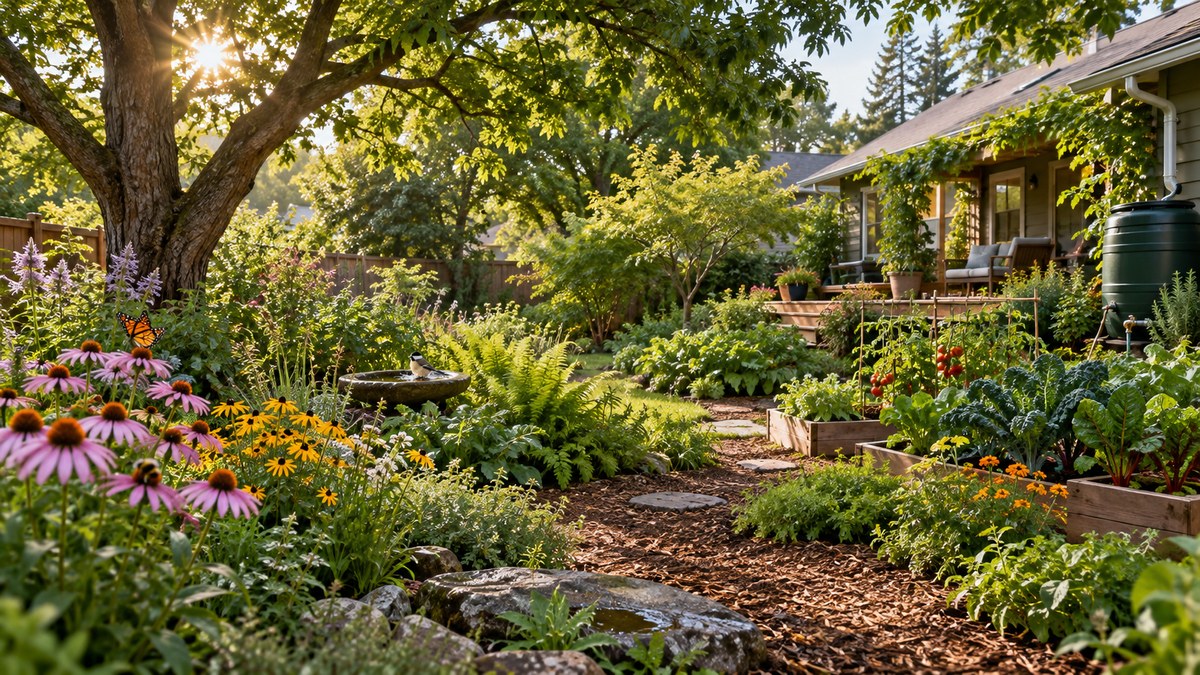
You step outside with your morning coffee. The birds are active, the air smells green, and your garden is doing something you might not realize. It is pulling carbon out of the atmosphere. Quietly. Every single day.
For years, the climate conversation has centered on big things. Power plants. Electric cars. International treaties. Those all matter. But here is the truth that more Americans are waking up to in 2026: your backyard is one of the most underrated climate tools we have. And unlike a solar panel or a heat pump, a garden keeps working even when you are not thinking about it.
Your garden can fight climate change by storing carbon in the soil, cooling the local air, reducing stormwater runoff, and cutting the emissions tied to store-bought produce. The key is shifting from a decorative lawn to a living ecosystem. Even a small yard can pull over half a ton of carbon out of the air each year when managed the right way. That is real impact, starting right outside your door.
Why Your Dirt Is More Important Than You Think
Most of us look at soil and see dirt. Something to walk on. Something to dig through to plant a petunia. But soil scientists see something different. They see the second largest active carbon sink on the planet, right after the oceans.
Here is the number that matters. The world’s soils hold about 2,500 gigatons of carbon. That is more than the atmosphere and all the plants on earth combined. When you improve the health of your garden soil, you are literally tucking carbon away underground where it cannot heat the planet.
The problem is that conventional yard care works against this. Tilling, synthetic fertilizers, and leaving soil bare all release stored carbon back into the air. The solution is a different approach. One that treats the ground beneath your feet as a living bank account for carbon.
The Four Pillars of a Climate-Fighting Garden
If you want your garden to fight climate change, you do not need a degree in environmental science. You need four things working together.
1. Keep Living Roots in the Ground Year-Round
Bare soil is a carbon leak. When rain hits bare dirt, it washes away organic matter. When the sun bakes it, microbes die and release CO2. The fix is simple. Never leave soil uncovered.
Cover crops like winter rye, crimson clover, or hairy vetch hold the soil together through the off-season. They feed microbes all winter long. Come spring, you chop them down and let them decompose right where they grew. That is free organic matter, free carbon storage, and free fertilizer.
2. Go Native and Go Perennial
A lawn of Kentucky bluegrass looks nice, but it is a climate disaster in disguise. It requires constant mowing (gasoline), fertilizing (manufactured emissions), and watering (energy intensive). Native perennials, on the other hand, develop deep root systems that store carbon far below the surface.
A prairie grass like switchgrass sends roots six feet deep. An oak tree can store tons of carbon over its lifetime. Even a patch of native wildflowers does more for the climate than a manicured lawn ever will.
3. Compost Like Your Planet Depends on It
Food scraps in a landfill generate methane, a greenhouse gas about 80 times more potent than CO2 over a 20 year period. Food scraps in your compost bin become black gold.
When you add compost to your garden, you are feeding the soil microbes that lock carbon into stable forms. A single pound of compost can help the soil store several pounds of carbon over time. Plus, you skip the emissions from manufacturing synthetic fertilizer.
4. Plant for Shade and Cooling
The urban heat island effect makes cities up to seven degrees hotter than surrounding rural areas. Your garden can push back. A well placed shade tree can cool your home enough to cut air conditioning use by 30 percent. That is fewer fossil fuels burned at the power plant.
Vines on a trellis, shrubs along a south facing wall, and even a thick ground cover all lower the temperature of the air around your house. Cooler air means less energy demand. Less energy demand means fewer emissions.
How to Start Your Climate Garden in 5 Steps
You do not need to rip out your whole yard this weekend. Start small. Here is a sequence that works.
-
Pick a spot that gets at least six hours of sun. Even a 4×4 foot patch can make a difference. Mark it off and clear whatever grass or weeds are there.
-
Test your soil. A $15 test from your local extension office tells you what you are working with. You need to know the pH, the organic matter level, and whether you need amendments.
-
Add compost. Spread two to three inches of good compost over the area. Do not till it in. Let the worms do the work. Tilling destroys the fungal networks that store carbon.
-
Plant a mix of deep-rooted perennials. Choose species native to your region. In the Midwest, that might be purple coneflower and little bluestem. In the Southeast, try black-eyed Susan and butterfly weed. Ask at a local native plant nursery.
-
Mulch heavily. Put down three to four inches of wood chips or shredded leaves. Mulch keeps the soil cool, holds moisture, and feeds the carbon cycle as it breaks down.
“The simplest thing a homeowner can do for the climate is stop treating their yard like a golf course. Let it be a meadow. Let it be a food forest. Let it be alive.” — Dr. Emily Chen, soil ecologist at the University of Vermont
What to Do and What to Avoid
Not all garden changes are equal. Some practices help the climate. Some hurt it. Here is a breakdown.
| Climate-Friendly Practice | Carbon Impact | Common Mistake to Avoid |
|---|---|---|
| Add compost annually | High: stores carbon for decades | Using fresh manure without composting it first (releases methane) |
| Plant native deep-rooted perennials | High: roots store carbon deep | Planting invasive species that crowd out natives |
| Use rain barrels and drip irrigation | Medium: saves energy on water treatment | Overwatering, which drowns roots and releases stored carbon |
| Replace lawn with clover or sedge | Medium: less mowing, less emissions | Killing lawn with herbicides that kill soil microbes |
| Plant a food-producing tree | High: combines carbon storage with local food | Pruning too aggressively, which stunts growth and carbon uptake |
The Hidden Climate Threat Under Your Feet
There is one mistake that undoes all your progress. Disturbing the soil.
Every time you rototill a garden bed, you release carbon that took years to build up. The same thing happens when you use a gas powered string trimmer too aggressively or let erosion wash away your topsoil.
The best climate gardens are no-till gardens. You lay compost on top. You plant into the mulch. You let the worms and roots do the digging. It takes a little patience, but the carbon payoff is enormous.
Why Your Lawn Mower Might Be Your Biggest Problem
Let us do some math. A typical gas powered lawn mower emits as much pollution in one hour as driving a modern car for over 100 miles. That is not a typo. The EPA has confirmed this for years.
If you mow a half acre lawn every week for six months, you are pumping out a significant amount of CO2 and other pollutants. Switching to a reel mower or an electric model eliminates that. Better yet, reduce the amount of lawn you mow by turning parts of it into garden beds or meadow.
The Surprising Climate Solution Hiding in Your Local Library
One of the best resources for climate gardening is free. Your local library or extension office likely has seed libraries, tool lending programs, and master gardener volunteers who can walk you through your first season. Many communities now offer free compost bins to residents. Check what is available in your area before you spend money.
Your Garden Won’t Save the World Alone, But It Doesn’t Have To
Let us be honest. Your backyard is not going to offset a coal plant. But that is the wrong way to think about it.
Every pound of carbon your soil stores is a pound that is not in the sky. Every native plant you put in the ground supports pollinators that keep our food system running. Every tomato you grow instead of buying from the store avoids the emissions from trucking, refrigeration, and plastic packaging.
And here is the part that does not show up in a carbon calculator. When your neighbor sees your garden thriving, they ask questions. When your kids watch you compost, they learn. The ripple effect of one climate garden is bigger than the garden itself.
Your Next Move for a Cooler, Greener Home
Start this weekend. Pick one corner of your yard. Turn it into a no-till, deeply mulched, native planted garden bed. Add a compost bin nearby. Watch what happens over the next year.
The soil will get darker. The worms will show up. The birds will find the insects that find your plants. And underneath it all, carbon will be moving from the air into the ground where it belongs.
Your garden can fight climate change. It already is. You just have to give it the tools to do more.
If you want to go further, look into how innovative strategies to reduce carbon footprints in urban areas can complement your backyard efforts. And for a deeper look at the ground beneath your feet, read about the hidden climate threat beneath your feet: why soil health is the key to carbon storage.