
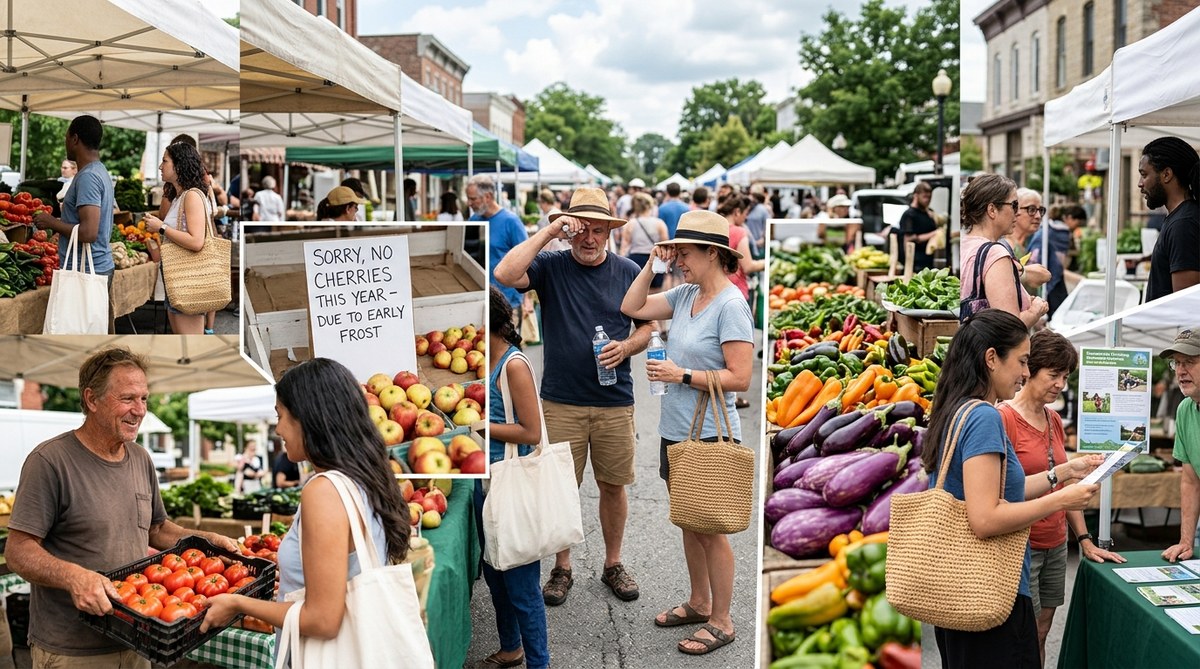
Your Saturday morning trip to the farmers market used to feel predictable. You knew when the first sweet corn would arrive. You could count on juicy heirloom tomatoes by the Fourth of July. And the apple harvest? That was a sure sign of fall. Lately, though, something feels off. The strawberries showed up in April. The maple syrup season ended weeks early. And the prices for a simple bunch of kale seem to climb every month. You are not imagining things. The climate change impact on farmers market is real, and it is already rewriting the rules of local food in the United States.
Climate change is not a distant threat for your farmers market. It is here. Warmer winters shift growing zones, extreme weather ruins harvests, and new pests attack crops that used to be safe. But this also opens the door for climate resilient crops, new local specialties, and a chance to support farmers who adapt. Understanding these changes helps you shop smarter, save money, and eat well in 2026.
Why Your Market Basket Looks Different This Year
The most obvious sign of the climate change impact on farmers market is the shifting calendar. Farmers in the United States now deal with what experts call “season creep.” Spring arrives earlier in many regions, pushing the first harvests forward. But a warm March can be followed by a surprise frost in April. That kills blossoms on fruit trees and wipes out entire crops of peaches, cherries, and apples.
At the same time, summer heat arrives earlier and stays longer. In the Midwest and Northeast, crops that love cool nights, like broccoli and peas, struggle. They bolt, turning bitter, before they reach full size. Farmers either lose the crop or harvest smaller yields. That means less supply at your market and higher prices.
“We used to plant our peas on St. Patrick’s Day without worry. Now we watch the forecast like hawks. One heat wave in May can cost us half our spring income.” – Sarah Kline, third generation farmer in Pennsylvania
Here is a snapshot of what is shifting across the country:
| Crop Type | Traditional Season | 2026 Reality | What It Means for You |
|---|---|---|---|
| Stone fruits (peaches, plums) | Mid to late summer | Early harvest, smaller size | Higher prices, fewer options |
| Leafy greens (kale, spinach) | Spring and fall | Bitter in summer heat | Shorter local season |
| Winter squash | October harvest | Ready in September | Earlier fall flavors |
| Maple syrup | Late February to April | Taps run 3 weeks earlier | Shorter syrup season |
| Berries (strawberries) | June | April or May in warm zones | Surprise early treat |
Three Ways Extreme Weather Wrecks Your Weekly Shop
The climate change impact on farmers market is not just about gradual warming. It is about the wild swings. A single storm can cancel a market day and ruin produce that was picked at peak ripeness.
-
Flooding and soil loss. Heavy rains, which are more common now across the US, saturate fields. Roots rot. Fungus spreads. Farmers cannot get tractors into muddy fields to harvest. Even if the crop survives, muddy conditions mean dirty greens and damaged fruit that cannot be sold.
-
Drought stress. Other regions face the opposite problem. California and the Southwest deal with chronic water shortages. Farmers pay more for irrigation or let fields go fallow. Fewer acres in production means less variety at your market. The tomatoes that do make it are often smaller and more expensive.
-
Heat waves during pollination. Corn, squash, and melons rely on pollinators and cool nights. When temperatures spike above 95 degrees Fahrenheit during pollination, the plants simply do not set fruit. You end up with empty husks and half formed ears of corn.
These events do not happen in isolation. A wet spring followed by a dry summer followed by a hurricane in fall creates a cascade of problems. Farmers lose entire seasons. Your market sees gaps where familiar vegetables used to be.
New Faces in the Produce Aisle
Here is the hopeful side of the story. The climate change impact on farmers market is also introducing new varieties. Farmers are smart. They are adapting by planting crops that thrive in warmer, more erratic conditions.
- Climate resilient crops like okra, cowpeas, and certain types of millet are showing up at markets far north of where they used to grow.
- Heat tolerant tomato varieties bred for the Southeast are now being grown in New England.
- Perennial grains and drought resistant greens like purslane and amaranth are becoming market staples.
You might also see more tropical fruits from local greenhouses. Figs, pomegranates, and even citrus are being grown in unexpected places thanks to protected cultivation and new microclimates. It is not a total loss. It is a shift.
Farmers are also using smarter techniques to fight back:
- High tunnels and shade cloth to lower temperatures for cool season crops.
- Drip irrigation that waters the root zone, not the whole field.
- Cover crops that build soil health and hold moisture.
- Planting multiple varieties of the same crop to spread risk.
If you want to help, ask your farmer what they are growing differently this year. Most love to talk about their experiments. It builds a connection that makes your purchase more meaningful.
How to Adjust Your Shopping Strategy
You can respond to the climate change impact on farmers market without giving up your Saturday routine. You just need a new mindset.
- Be flexible with your meal plan. Do not go to the market with a fixed list. Go with an open basket. Buy what looks best and figure out dinner later.
- Buy extra when you see a surplus. If a farmer has a mountain of peppers at a good price, grab them. Freeze, can, or dehydrate for later.
- Talk to farmers about substitutions. If you usually buy zucchini and the crop failed, ask what summer squash they recommend instead.
- Arrive early for the best selection. Extreme weather means smaller harvests. The early bird gets the good stuff.
- Support farmers who use sustainable practices. They are the ones investing in soil health and water conservation. They are building resilience for the long haul.
Farmers markets are also becoming hubs for education. Many now host workshops on food preservation, seed saving, and climate adaptation. Attending these helps you and your community.
The Hidden Cost of Climate Change in Your Wallet
You have probably noticed that your grocery bill has gone up. The climate change impact on farmers market plays a direct role. When a farmer loses a crop to a late frost or a flood, they have to raise prices on what survived. They have fixed costs: land, water, labor, seeds. If they only harvest half the crop, each tomato has to cost more to cover the same expenses.
This hits small farms hardest. A big industrial farm can absorb some losses. A family farm with five acres cannot. That is why you see more farmers selling at premium prices or switching to value added products like jams, pickles, and sauces. Those products last longer and earn more per pound.
Here is a practical list of what you can do to protect your budget:
- Join a CSA (community supported agriculture) share. You pay upfront, which gives the farmer cash when they need it most. You also share in the risk. In a good year, you get a bounty. In a bad year, you get less, but you help the farm survive.
- Shop at the tail end of market day. Farmers would rather discount produce than haul it home.
- Buy ugly produce. Blemished fruit and oddly shaped vegetables taste the same and cost less.
- Preserve the season. When you find a deal on tomatoes or peaches, spend an afternoon canning or freezing. It pays off in winter.
A New Relationship with Your Food
The climate change impact on farmers market is forcing all of us to become more aware of where our food comes from. That is not a bad thing. When you know that a farmer lost her peach crop to a freak hailstorm, you appreciate the peaches you do find. You understand the price. You become part of the solution.
Farmers markets are more than places to buy food. They are community gathering spots where you can see climate change in action and respond to it. By showing up, asking questions, and spending your money with farmers who care for the land, you help build a food system that can handle what comes next.
Looking Ahead to the Next Market Season
The farmers market of 2026 is not the same as the one you visited five years ago. It will not be the same five years from now. But that is alright. Change is not the enemy. Being unprepared is.
As you plan your next market trip, remember these three things. First, expect surprises. The crop you loved last August might not be there this year. Something new will take its place. Second, build a relationship with a farmer you trust. They will tell you what is happening before anyone else. Third, vote with your wallet. Every dollar you spend at a local market supports a farmer who is adapting to a changing world.
The climate change impact on farmers market is real. But so is the resilience of the people who grow your food. Show up. Be curious. And enjoy the unexpected treasures that a changing climate brings to your table.